How to Document Roof Damage for an Insurance Claim (Photo Guide)
By Charlie Carreon, Owner6 min read
The storm's passed, there's a stain spreading on the bedroom ceiling, and the adjuster won't be out for a while. Learning how to document roof damage for insurance can mean a claim that wraps up in a few weeks instead of one that drags for months. After a big Texas storm, adjusters work through roof after roof, and the files with clear, dated, organized evidence move faster and leave less room to argue about whether the damage is new.
You don't have to climb on the roof to do any of this. Please don't. A solid record can be built from the ground, the attic and the rooms inside.
Before anything else: stay safe and stop the water
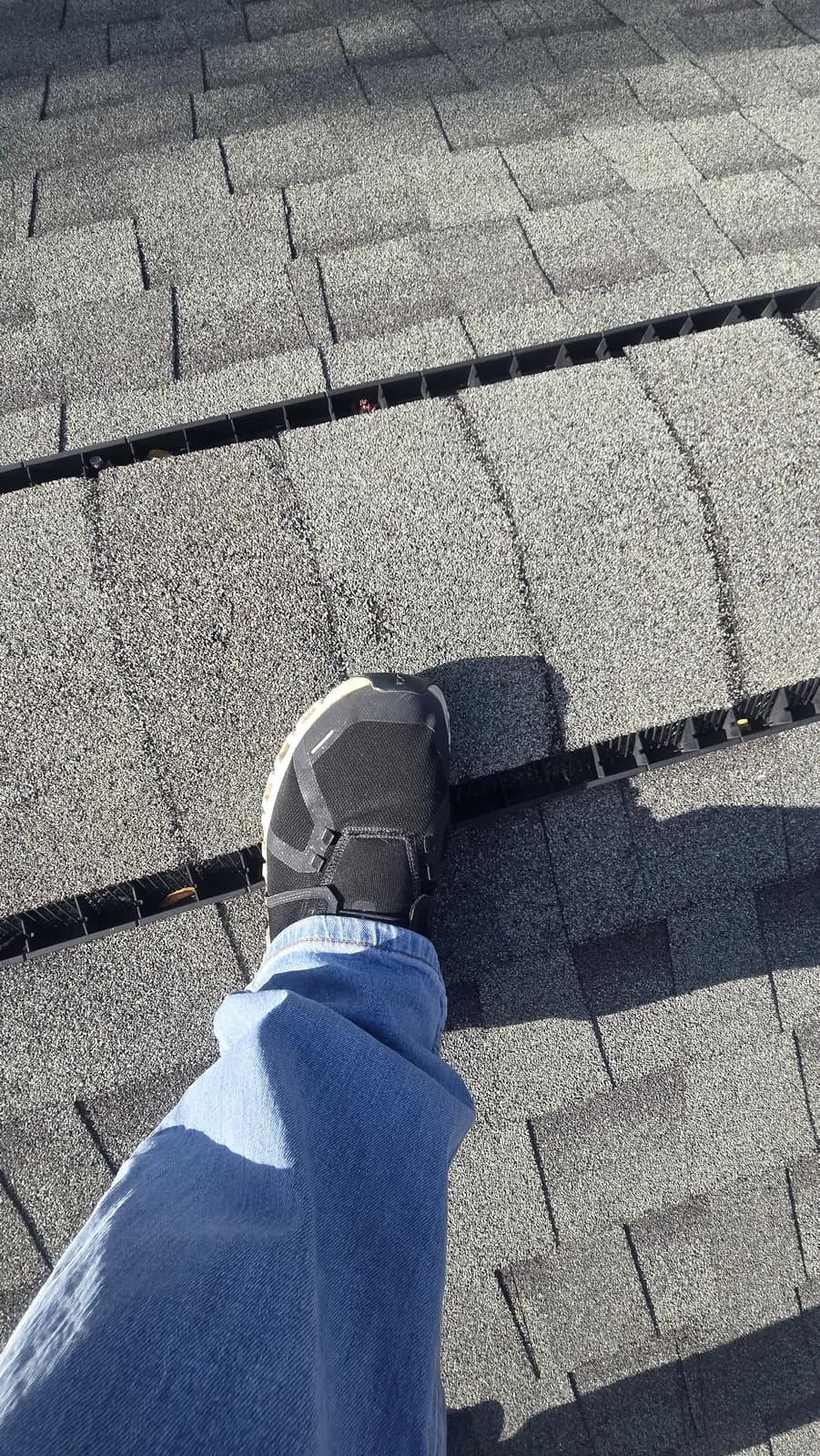
Few places are worse to stand than a wet roof after a storm. Shingles turn slick, the decking might be soft, and hail-scarred shingles shed granules that roll under your feet like ball bearings. Leave the roof to somebody with fall protection.
Your job right now is keeping the damage from spreading. Most homeowner policies require reasonable steps to protect the property after a loss. Set buckets under the drips. Move furniture and electronics out of the way, and if water's getting in, get a tarp on the roof. When it's bad, our emergency roof repair crews can tarp and seal the open spots.
Keep every receipt for that temporary work, tarp to box fans. Insurers generally count reasonable emergency costs as part of the claim. You have to be able to prove them.
Lock down the storm date
Every claim starts with the same question. When did this happen?
Jot down the date and rough time of the storm while it's fresh. Then back it up with something besides your memory:
- Screenshots of the weather alerts on your phone
- Photos or video you shot during the storm, which carry a time stamp
- Local news coverage
- National Weather Service storm reports for your area
People underrate this. Say your roof had an older hit nobody ever claimed, and a new storm piles on more damage. The date is what ties the evidence to the event your claim is actually about.
The photo checklist: outside, from the ground
Use your phone, with location and time stamps on. Shoot more than you think you'll need. Storage costs nothing, and once the storm debris is cleaned up, you can't go back and get it.
Start wide
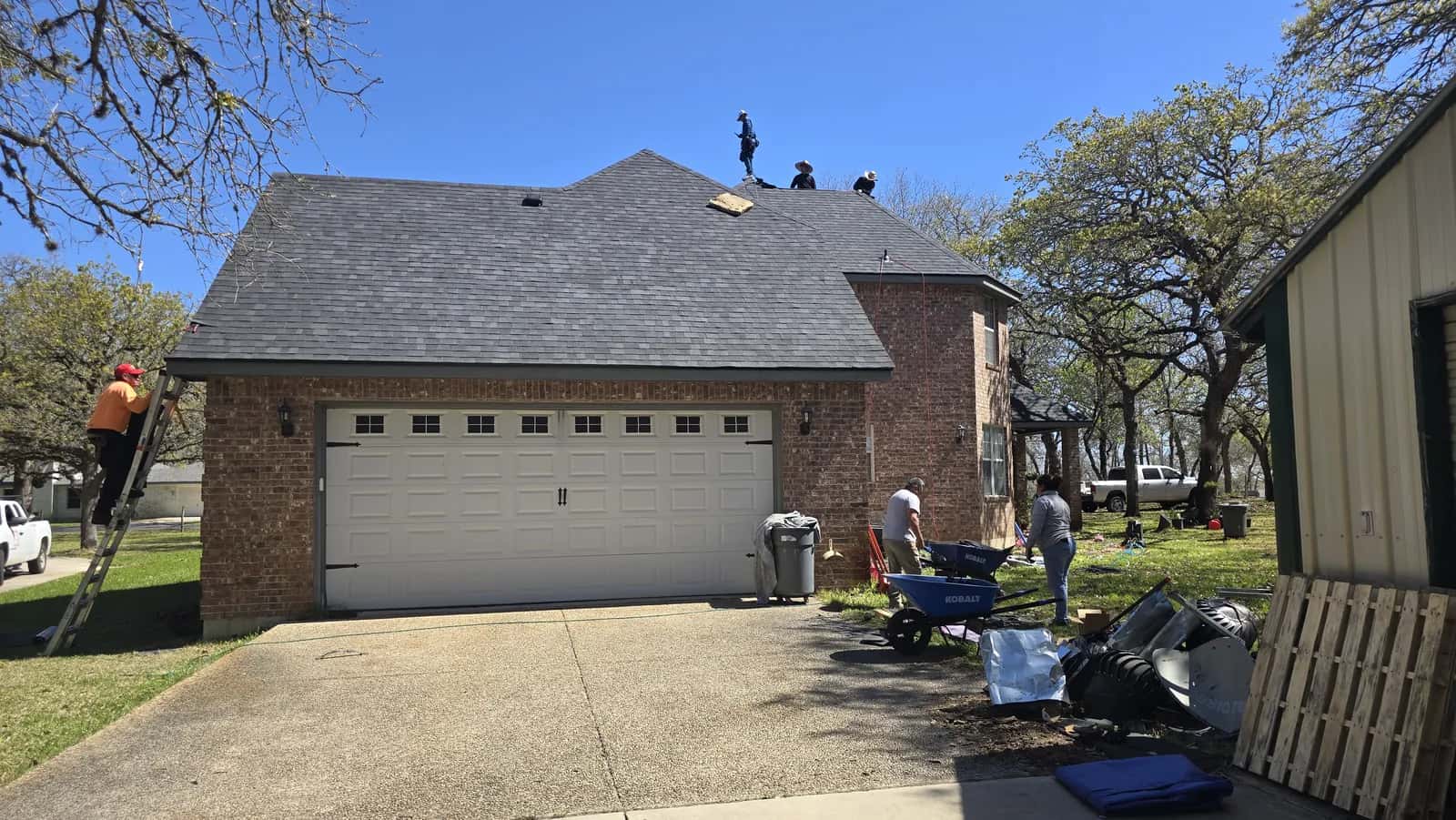
Walk the house and take a wide shot of each side with the roof line in it. These "establishing" shots show the adjuster where everything else fits. Do the same across the whole lot, detached garages, sheds and fences included.
Then go medium and close
Every problem gets three shots: one far enough back to show where it is on the house, one medium, one close-up. In the close-up, set a coin, a tape measure or your hand beside the damage for scale.
What to photograph
- Missing, torn or lifted shingles you can spot from the yard
- Shingles, granules or debris lying on the ground
- Dents in gutters, downspouts and the metal roof vents (zoom in from the ground)
- Granule piles where the downspouts empty
- Cracked or holed siding, dented window frames
- Spatter marks and dents on A/C units, mailboxes, cars and patio furniture
- Broken fence boards, damaged sheds
- Fallen limbs, especially any resting on the roof
Don't skip the soft metal. Gutters and A/C fins show hail size clearly, and those photos back up whatever an inspector finds on the shingles later. Hailstones still lying around? Photograph a few next to a ruler.
In the rush to deal with the house, people forget the fence and the shed. Get them in the same pass, since storm damage to fences and sheds can often go on the same storm damage claim as the roof.
Inside the house and the attic
Interior water damage often moves a claim from "maybe" to "clearly covered," so be thorough with it:
- Ceiling stains, with a wide shot of the room plus a close-up of the stain
- Active drips, on video if possible
- Wet insulation, carpet or drywall
- Damaged belongings, before you move them or throw them out
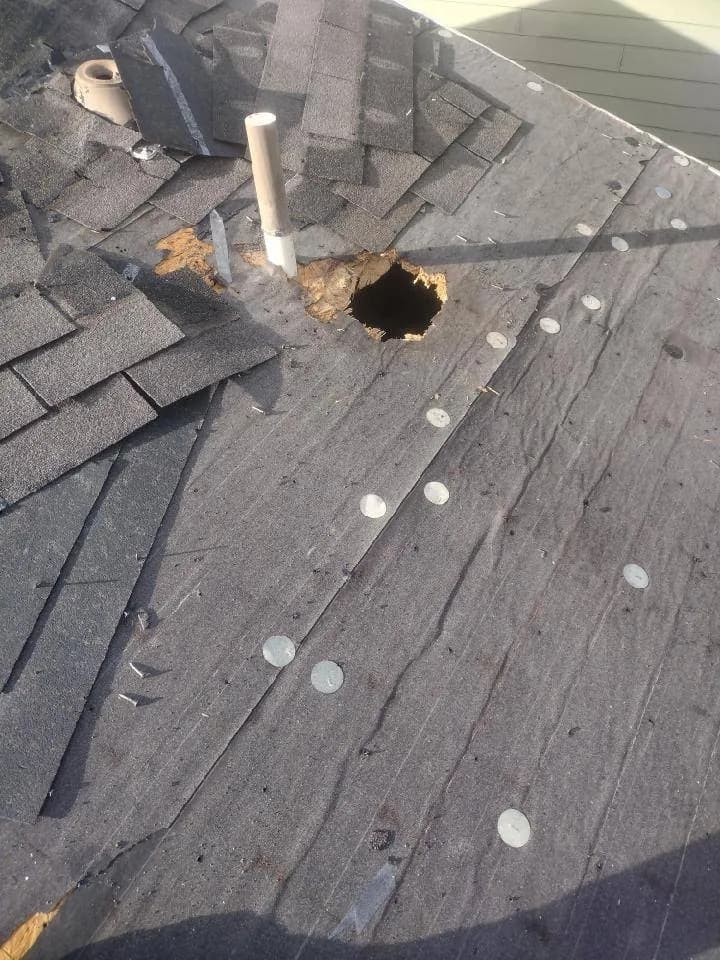
If you can get into the attic safely, take a flashlight and look for daylight through the decking, wet spots on the underside of the roof and stained rafters. Photograph all of it. Mind your feet up there, and step on joists only, never between them.
Also, hang on to damaged stuff until the adjuster has seen it or okayed getting rid of it. If something has to go for health reasons, soaked carpet pad for instance, photograph it well first and keep a sample if that's practical.
Build a simple claim log
Photos are half of it. A written log is the other half, and a notebook or a note on your phone is plenty. Keep track of:
- The storm date and time, plus where you got it.
- When and how you reported the claim, and your claim number.
- Each call with your insurer: the date, who you talked to, what they said.
- Each visit, whether adjuster, contractor or inspector.
- What you spent on temporary repairs, with receipts.
- Any deadlines your insurer gives you, in writing when you can get it.
Texas law gives insurers time frames to acknowledge, investigate and pay most property claims. Those are laid out in the prompt payment rules in Chapter 542 of the Texas Insurance Code, and if you think a carrier isn't keeping to them, the Texas Department of Insurance takes complaints. With a decent log, you can tell at a glance whether things are on schedule. Your policy will have its own reporting deadlines and requirements, so read it. This isn't legal advice.
Old photos are evidence too
Almost nobody thinks of this one. Scroll back through your phone for older pictures of the house. That shot of the kids in the front yard last summer might show a clean roof line and straight gutters. Listing photos from when you bought, the home inspection report, a past roof inspection: they all show what the roof looked like before the storm.
When an insurer claims the damage is old wear and tear, that kind of proof carries real weight. It's also the strongest case for getting a documented roof inspection before storm season, so a baseline's already on file.
Back it all up. Email the photos to yourself or put them in cloud storage, in one folder named for the claim.
When to bring in a professional
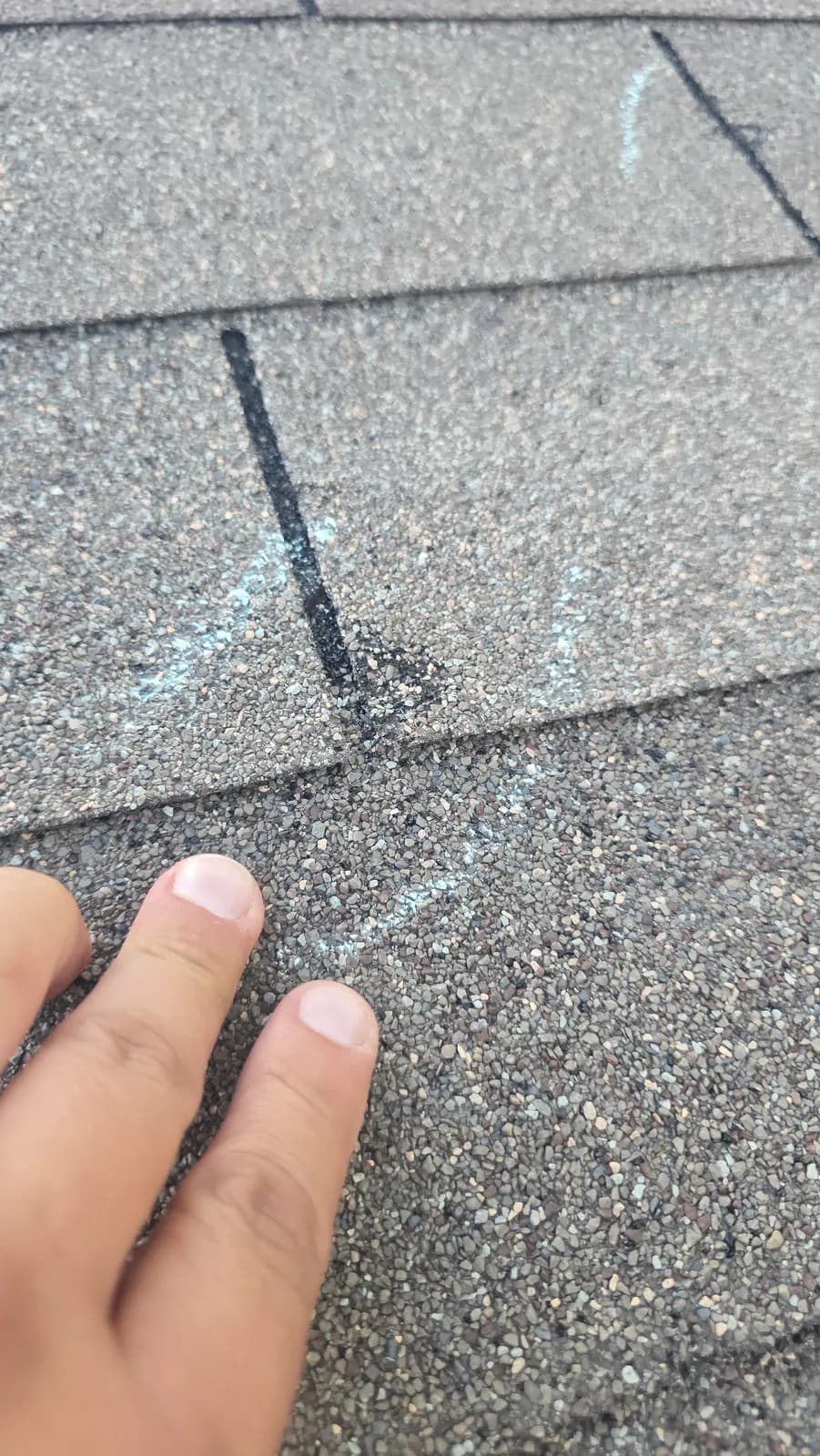
Your photos from the ground get the claim going, and for a homeowner that's most of how to document roof damage for insurance. A roofer's inspection covers what you can't see from down there: bruised shingles, cracked mats, damaged flashing, and the slope-by-slope detail adjusters ask for. A good inspector shoots each slope with chalk circled around the hail strikes and test squares marked, so the adjuster can check it fast.
Texas-RRR's in-house staff includes former insurance adjusters, and we bring 30+ years of insurance claim experience to the roof. We meet your adjuster on site and go over the damage together. That's the heart of our insurance claim process. Once the claim's approved, our storm damage repair crews do the work.
Claim stalled, or denied? Our guides on what to do when a roof claim is denied and the roof insurance claim process in Texas cover what comes next. Commercial and HOA properties need more paperwork, and our guide to commercial roof insurance claims handles that.
Want a pro to take a look? Schedule a free inspection or call (210) 802-6906, Monday through Saturday, 7 a.m. to 6 p.m..
Related services
Insurance Claims from Texas-RRR, with a free estimate before any work starts.

Written by
Owner, Texas-RRR (veteran owned) · 30 years of roofing experience · Team with 30+ years of insurance claim experience · In-house former insurance adjusters · Registered and insured