

Why gutters fail faster in San Antonio
It doesn't drizzle much here. It pours. One spring storm can put down an inch or two in an hour, and the gutter that coped with light rain for years spills over the first time it really comes down. Water sheets off the eave, soaks into the fascia and puddles along the foundation. In San Antonio's older neighborhoods and on the South Side, that puddling is a common reason pier-and-beam houses start shifting.
Trees make it worse. Live oaks drop their leaves in March and their acorns from September into November, and plenty of both end up in the gutter. After two or three seasons the downspouts clog. The trough fills with wet mulch, and all that weight pulls the hangers out of the fascia. Now the gutter sags and holds water, which rusts steel and breeds mosquitoes.
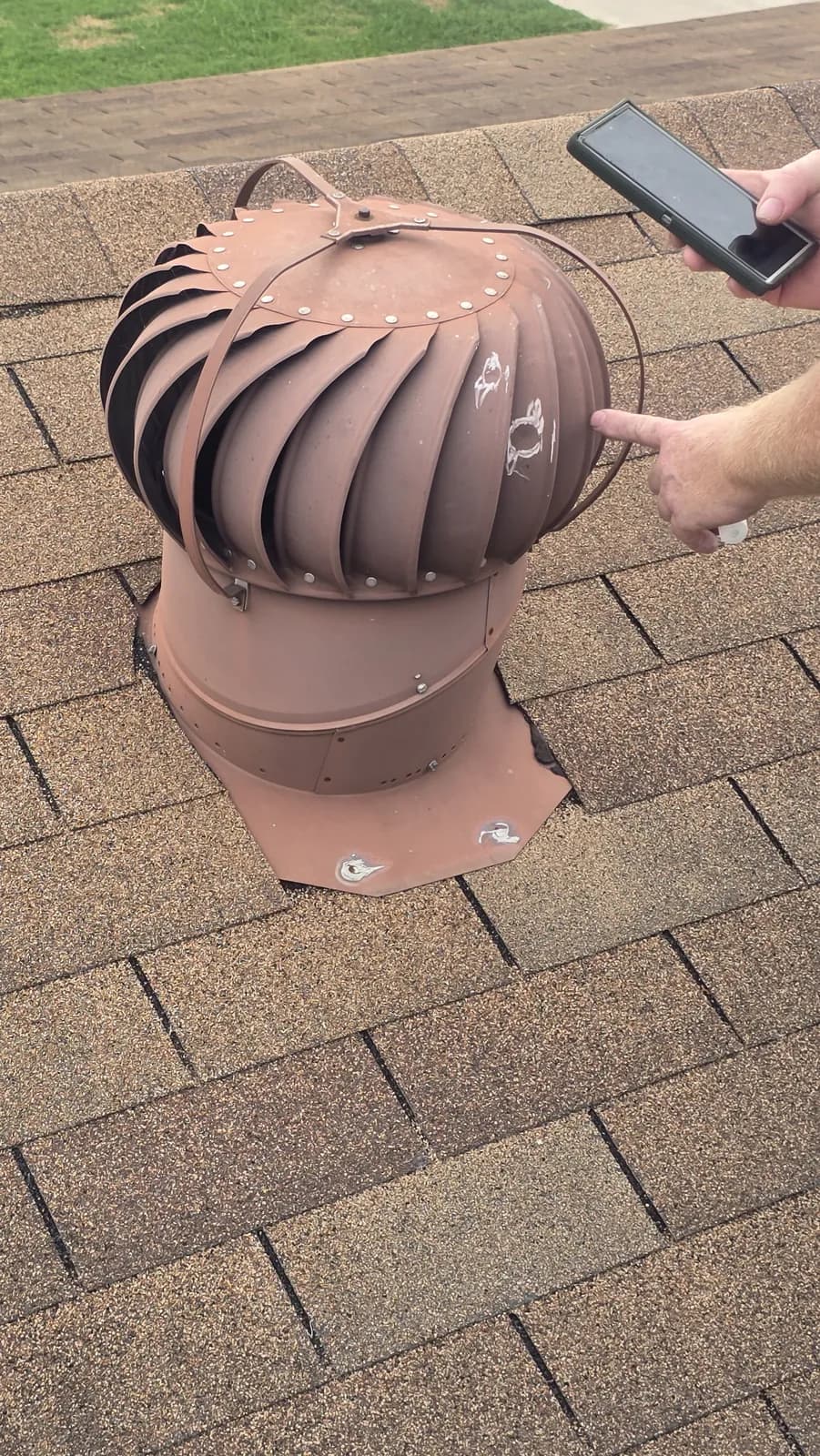
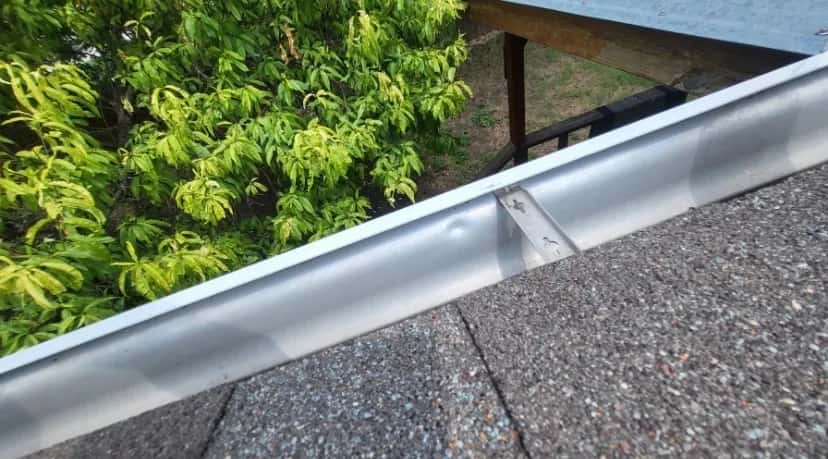
And then hail. Gutters, downspouts and vent caps are soft metal, so they dent before shingles show anything, and that's why adjusters look at them first. On April 12, 2016, hail up to 4.5 inches fell across Helotes and northwest Bexar County. The late April 2021 outbreak split in two, with one cell over Boerne and another running through San Antonio along I-10 toward Seguin. A lot of people never replaced their gutters after those storms. We still find them leaking at the seams. A dented gutter keeps draining, more or less, but a dented joint pops open, and you'll see the drip wherever two sections meet. Every joint is a weak spot. That's the whole argument for seamless.