
Commercial Roof Repair in San Antonio: Where the Leaks Start
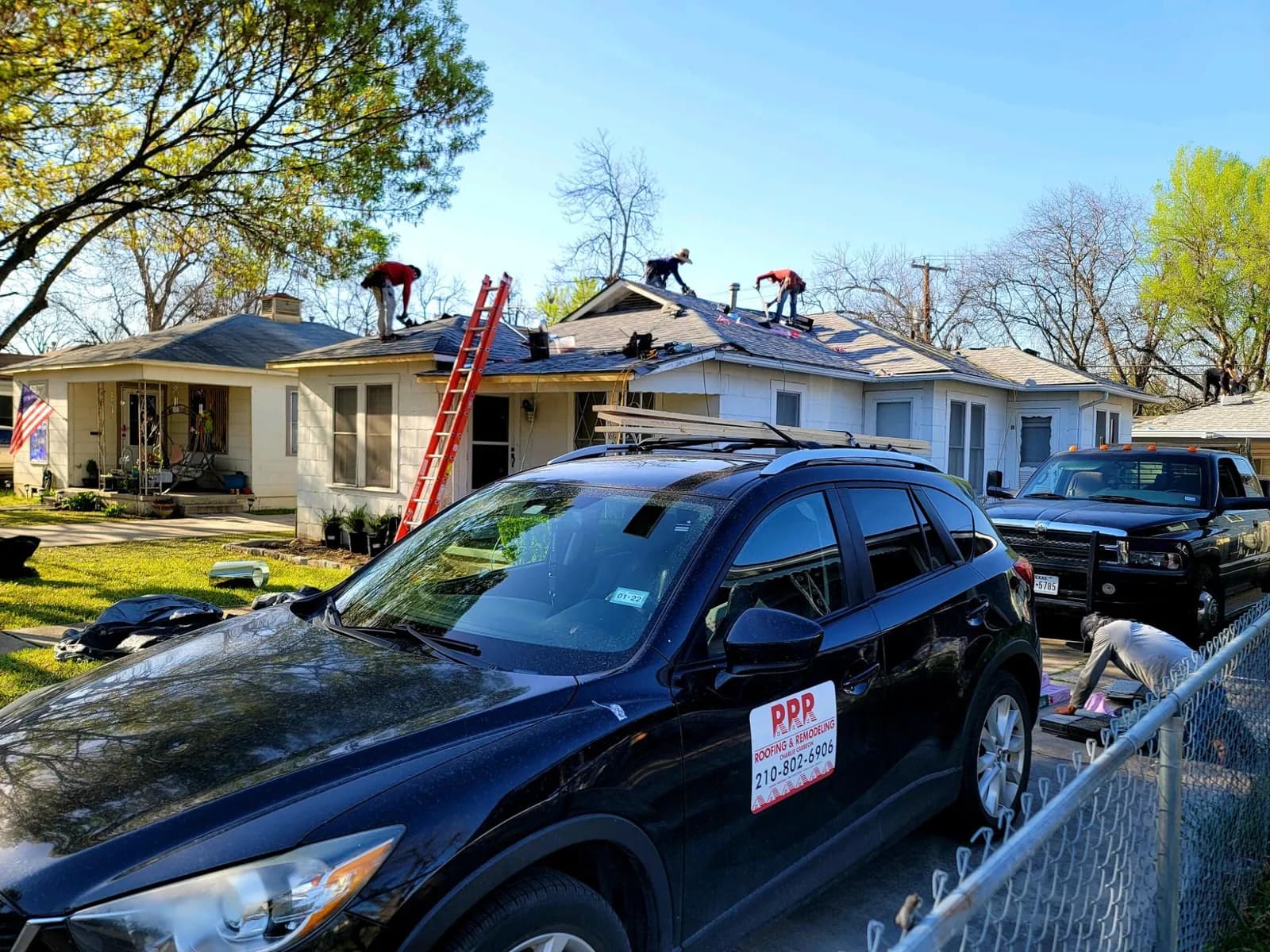
A tenant calls about a brown ring on the ceiling tile above her desk. More often than not, the commercial roof repair in San Antonio that follows has nothing to do with the spot over that desk. It's at a penetration. Rooftop HVAC units, exhaust fans, vent stacks, conduit and gas lines all punch through the membrane, and water looks for every one of them. Texas-RRR fixes those leaks on TPO, modified bitumen and low-slope shingle roofs for building owners, property managers and HOA boards all over San Antonio. Our own commercial crews do the work, and the estimate is free.
Our old site said it like this: "Commercial roofing requires knowledge about various aspects such as external piping and air flow systems." Still true. Put a shingle-only roofer on a flat roof with six rooftop units and a mess of condensate lines, and he'll seal the wrong thing. We've watched it happen. The stain is over the desk, but the water came in forty feet away, at a curb where an HVAC tech stepped on the flashing last spring.
The failures we run into most on commercial roofs:
- HVAC curbs. Units vibrate and membranes shrink, so the flashing creeps away from the curb. Add a condensate line draining right onto the roof and one patch stays wet all summer.
- Pipe and conduit penetrations. Pitch pockets dry and crack, boots split, and somebody runs a new line through the deck without flashing it at all.
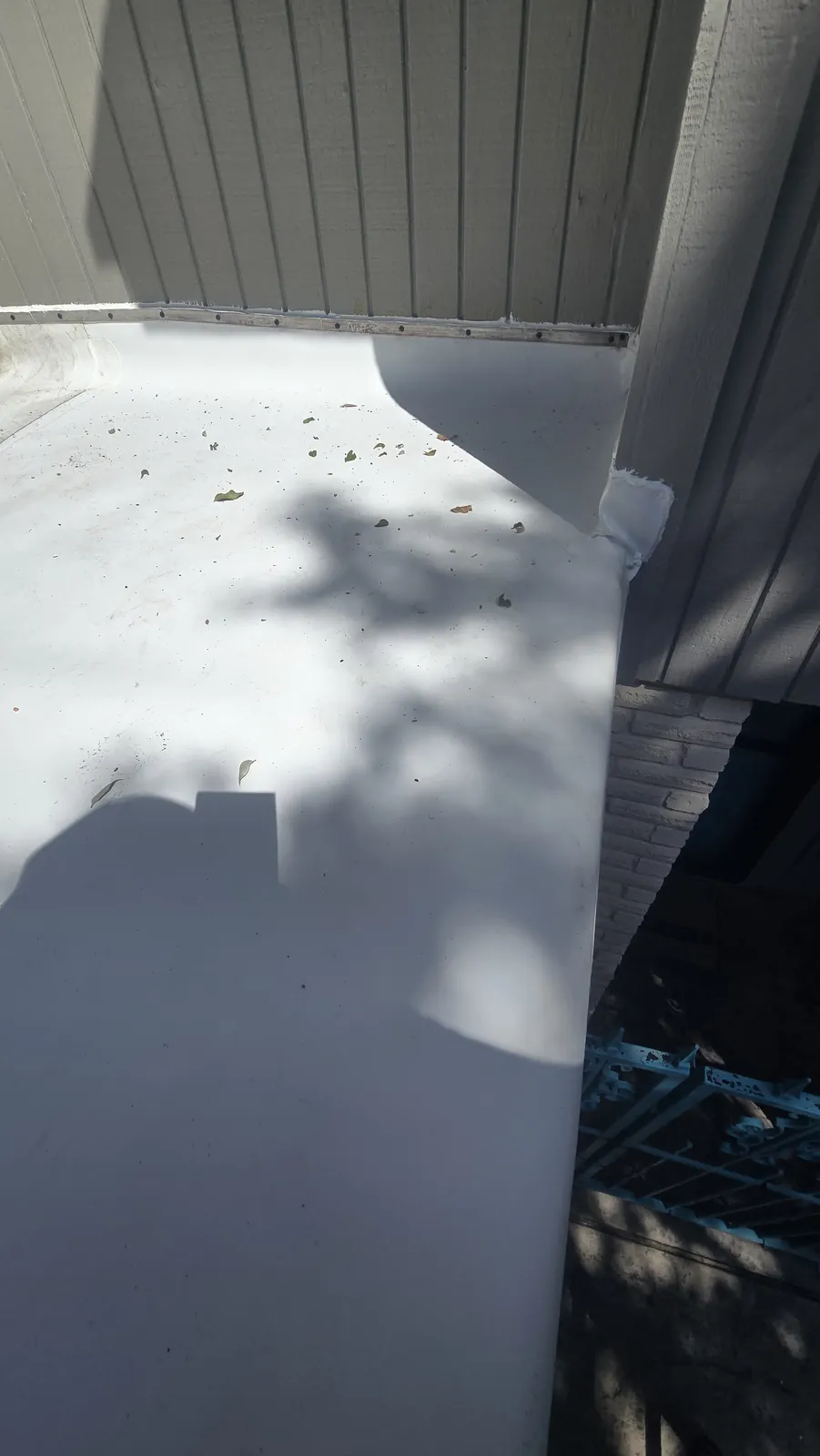
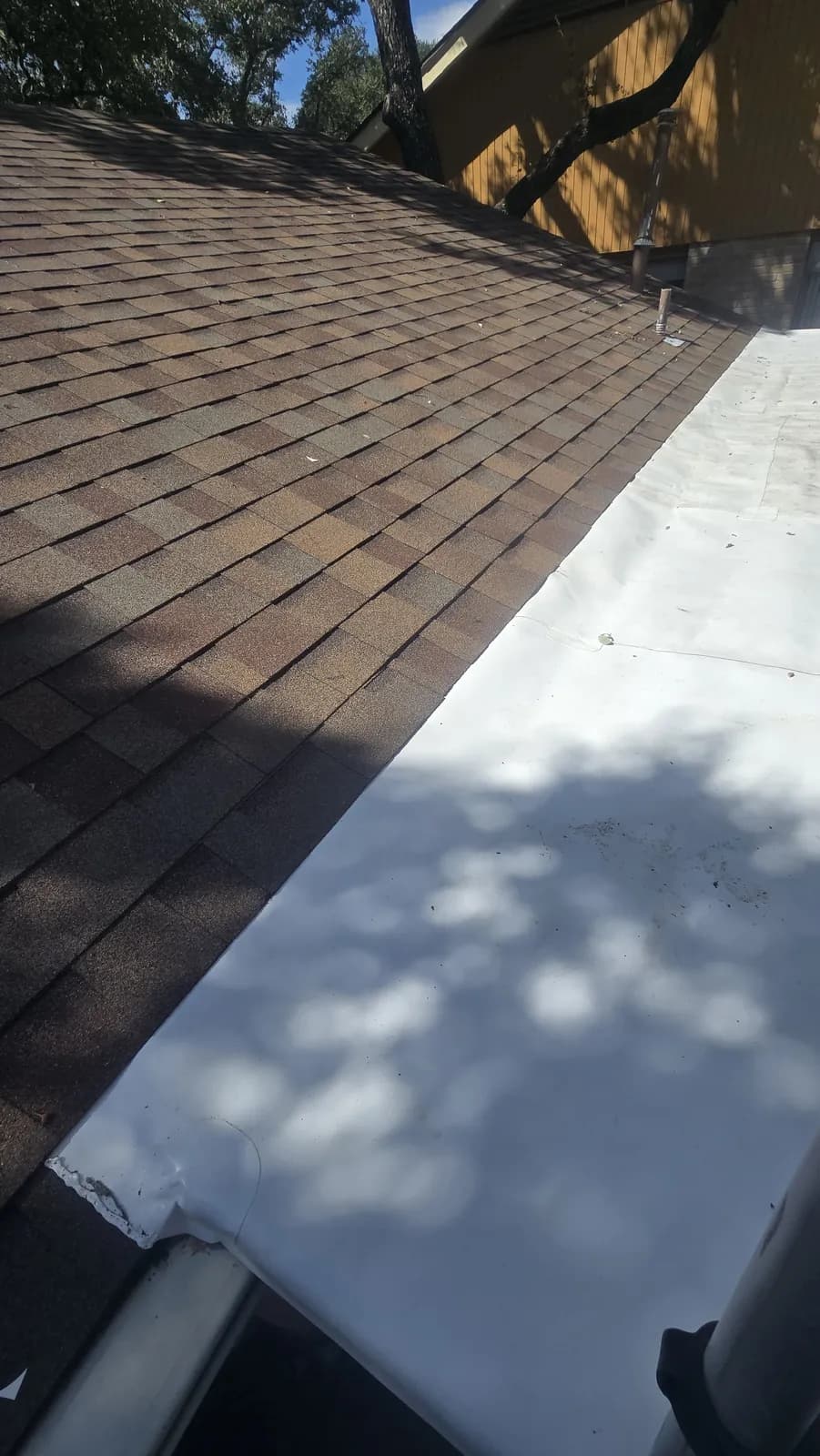
- Seams and laps. A cold weld on TPO opens. On mod-bit, the cap sheet lifts at the lap and water slides underneath.
- Drains and scuppers. Leaves, acorns, now and then a tennis ball. Water ponds and the membrane never dries out, and before long the deck under it is rotting.
- Edge metal and coping. Wind gets under it and the sealant lets go. Then the parapet soaks from the top down.
We repair the actual entry point. You'd think that goes without saying. It doesn't. Plenty of commercial roof repair around here is a bucket of mastic smeared over the wet spot, good for maybe one season. Doing it right means reflashing the curb or rebuilding the pitch pocket, welding or torching on a real patch, and pulling any cover board that got wet. Want to understand the systems themselves? Our flat roofing page goes deep on TPO and modified bitumen.