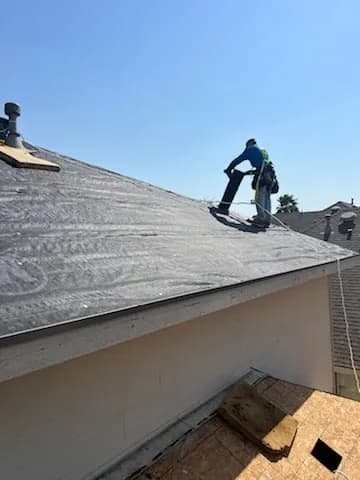
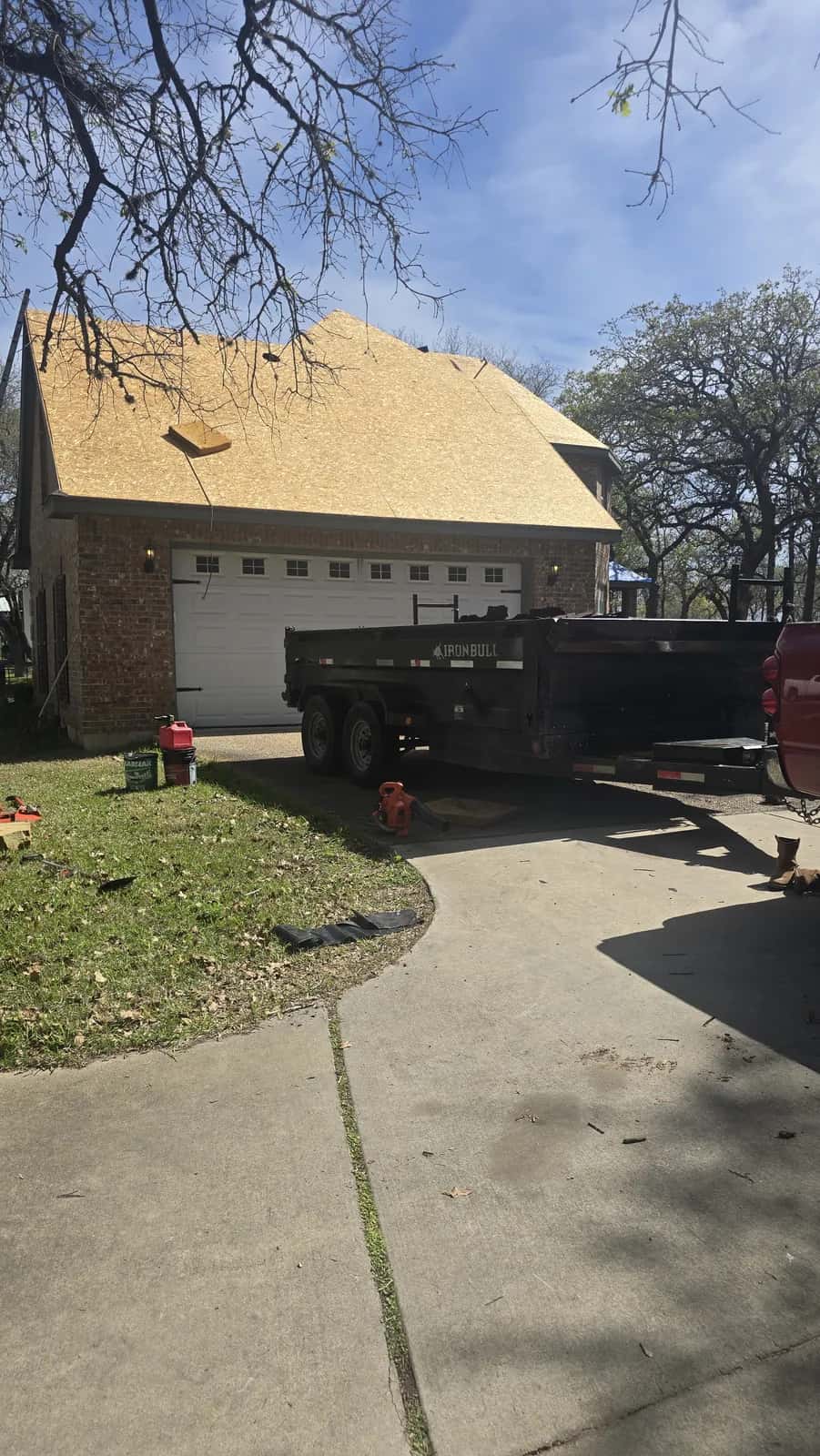


What roof decking replacement involves
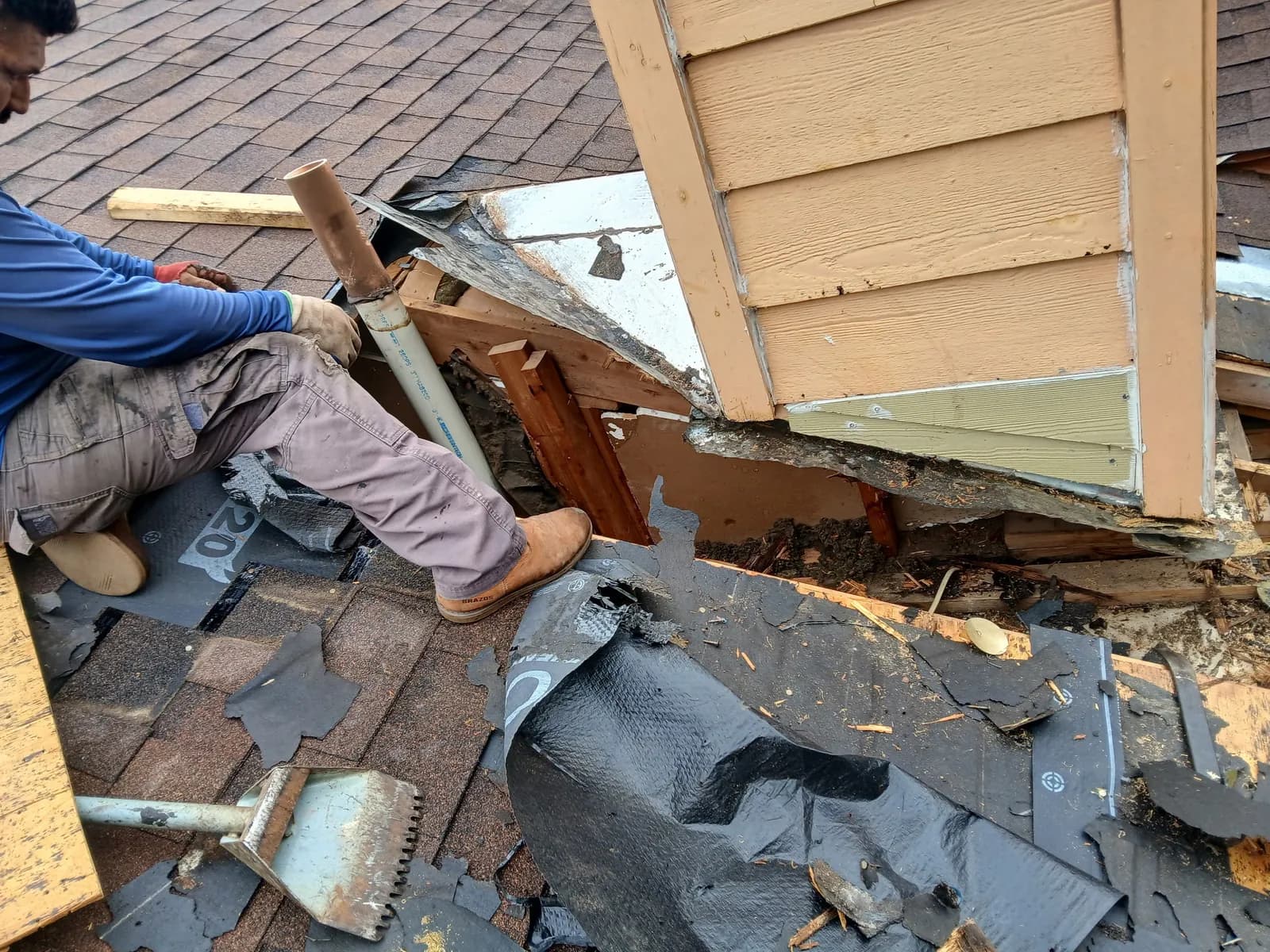
Pull back a shingle and you'll find felt or synthetic underlayment. Under that is the decking, sometimes called sheathing: plywood, OSB or wood planks nailed across the rafters. Everything above depends on it. Let it stay wet long enough and it rots, swells or comes apart in layers, and then it won't hold a nail. Roof decking replacement is cutting those sections out after tear-off and putting in new sheets of the same thickness before the roof goes back on.
Here's what a lot of homeowners only learn once the crew's already up there. Nobody can tell you from the driveway how much decking you'll need.
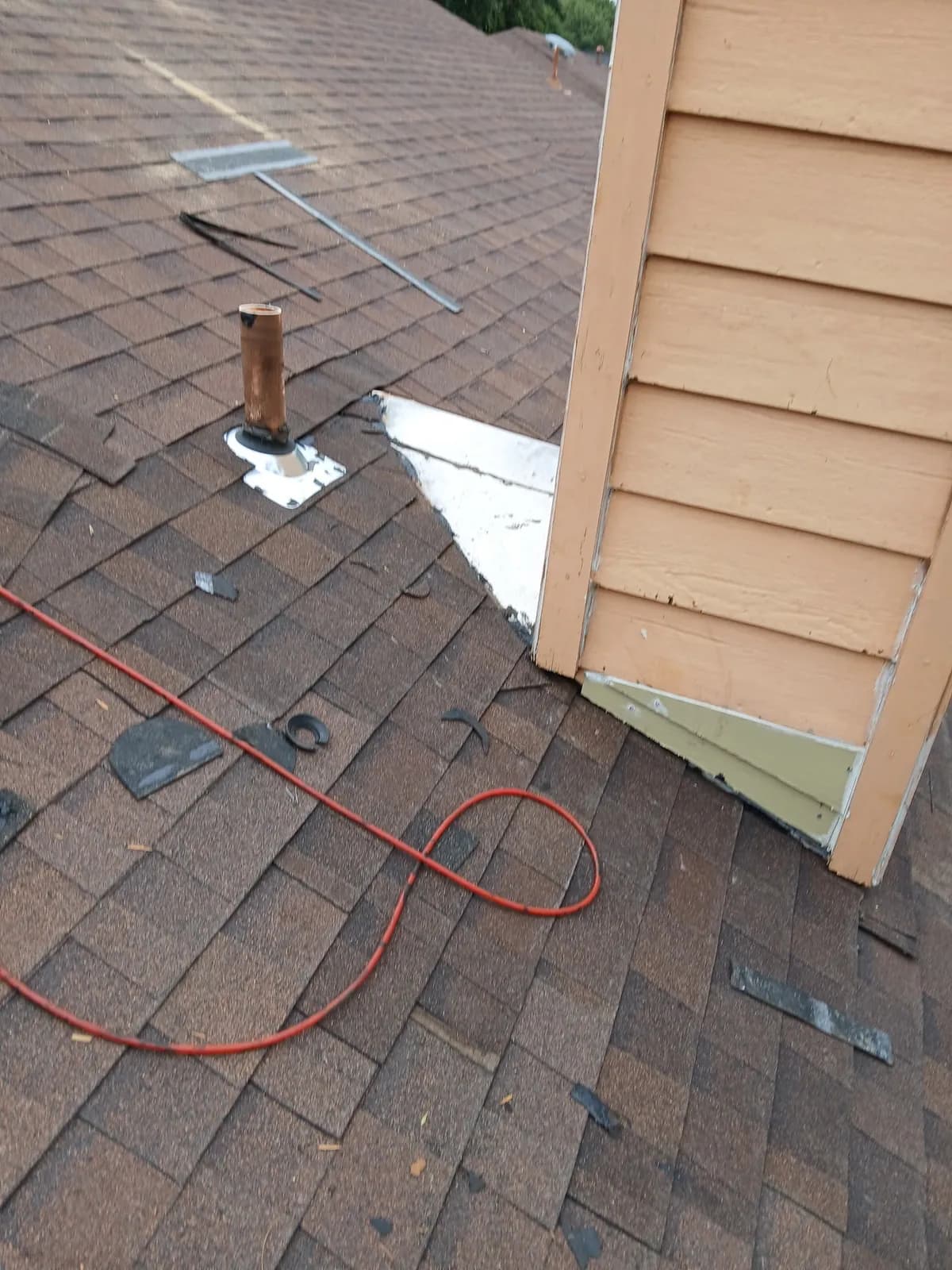
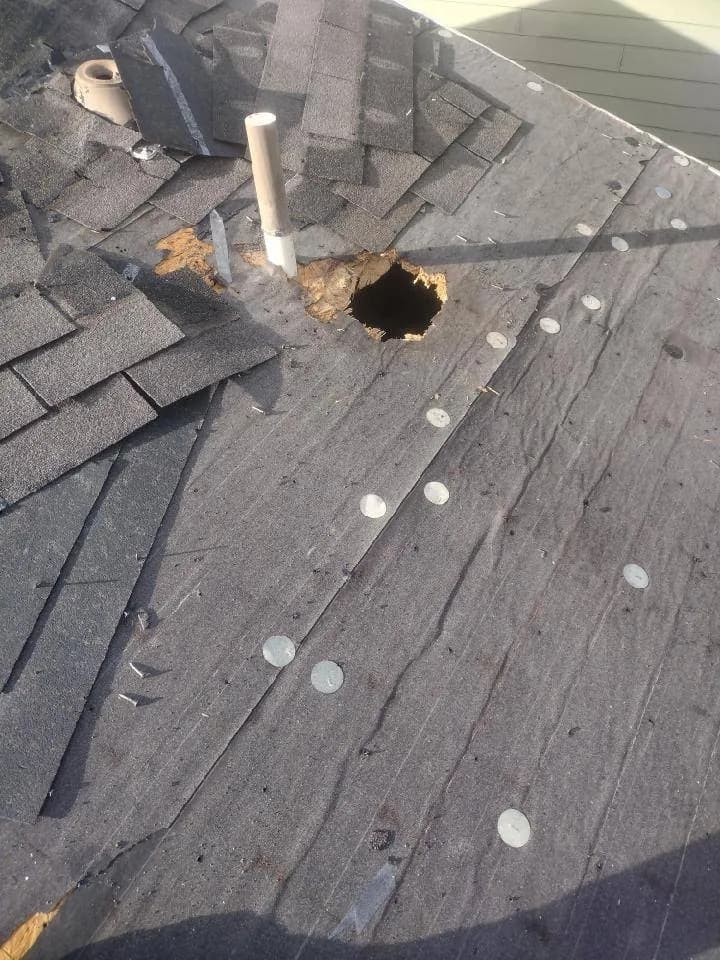
We can spot the obvious stuff from the attic and the surface. A sagging line between rafters. A spot that feels soft underfoot. Dark stains or white mold on the underside of the plywood, or daylight near a vent pipe or down in a valley. The real number, though, comes after the shingles are off and we can walk every sheet. Bad ones get marked, cut back to rafter centers and replaced.
Older San Antonio houses are their own case. Homes built before the 1970s on the South Side, in Monte Vista and in Southtown often have 1x6 or 1x8 planks with gaps between the boards. Owens Corning and GAF both want a solid deck under their shingles, with board gaps kept to about a quarter inch. Wider gaps or split boards mean we overlay the planks with new sheets or re-deck that slope. Yes, it costs more up front. It's still the right call, because a shingle nailed into a gap tends to leave in the next big wind.