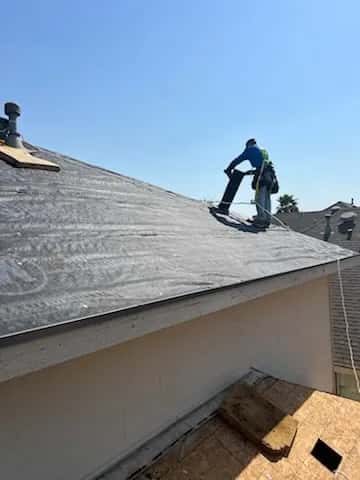


Roofer at the eave of a roof covered in synthetic underlayment with a dormer behind

Roof Repair

Tile Roof Repair in San Antonio, TX

Most of what goes wrong with a tile roof is hidden. That's the first thing to know about tile roof repair in San Antonio. Tile sheds the rain, but it's the underlayment under it that keeps water out, and that layer gives out decades before the tile does. Texas-RRR repairs clay and concrete tile roofs: cracked and slipped tiles, worn underlayment, failed flashing, hail damage. When a storm did it, we have former insurance adjusters on staff. Free estimates.

  • Clay and concrete tile
  • Cracked and slipped tiles reset
  • Underlayment lift and relay
  • Walked the right way

Preferred
brands

Owens CorningGAF

Google5.016 reviews

  • Veteran Owned
  • Registered and Insured
  • San Antonio and Austin

What is included with tile roof repair

  • Clay and concrete tile

    Spanish S, two-piece mission barrel and flat concrete profiles. Each one gets repaired a little differently, so first we figure out which you have.
  • Cracked and slipped tiles reset

    Broken pieces come out and replacements go back on the batten. Slipped tiles get refastened so the course lines up again.
  • Underlayment lift and relay

    Leaking, but no broken tiles? We lift that section, replace the worn underlayment and flashing, and put the same tiles back.
  • Walked the right way

    Our crews only step where the tile's supported, on the overlap above the batten, so fixing one crack doesn't create three more.
  • Hail damage documented

    In-house former adjusters photograph fresh breaks apart from old cracks. That's the first thing a carrier is going to question.
  • Straight talk on matching

    If your profile or color isn't made anymore, you'll know before we start, along with the closest options and where they'd go.

Clay or concrete tile: what is actually on your roof

Clay or concrete? We ask that before anything else on a tile roof repair in San Antonio. From the curb the two can look almost the same. Up close they act like completely different roofs, and the repair changes with them.

Clay tile is fired clay, and the color usually goes all the way through. That's why a clay roof that's been up for decades still looks terracotta red or buff. It holds its color in the South Texas sun. It's also brittle. Step wrong on an old clay barrel tile and it snaps, which is how a lot of clay roofs end up with a dozen broken pieces nobody remembers breaking.

Concrete tile is cast from sand and cement and then colored. It's heavier than clay and soaks up more water, and on many concrete tiles the color is mostly on the surface. Over the years it fades and chalks. So a brand-new concrete tile almost never matches a 20-year-old roof on the first try. Underfoot, concrete is tougher than old clay.

Neither one is waterproof on its own. Most owners never hear that.

The profile matters as much as the material:

  • Spanish S tile. A single piece with that familiar wave. You'll see it on Mediterranean-style homes all over the north side.
  • Mission or barrel tile. Two pieces, a pan laid curve-down into the roof and a cover tile over each joint. It's on a lot of San Antonio's Spanish Colonial Revival homes, the style you see in Olmos Park and parts of Alamo Heights.
  • Flat and low-profile concrete. Sits flatter and can pass for slate or shake from the street. Mostly on newer homes.

Can't tell which you have? Look at the broken edge of a cracked piece. Clay usually shows the same color straight through, while concrete often shows gray cement under the color. Send us a photo of the face and the broken edge, and we can usually tell you before anybody gets on a ladder.
Tile isn't the waterproofing layer. The underlayment is.

Most people assume the tile keeps the water out. It doesn't, not really. Tile sheds most of the rain and protects what's under it from sun and hail, but the underlayment beneath it does the actual waterproofing. Wind-driven rain gets under the tile on every tile roof ever built. It's supposed to. Then it's supposed to run down the underlayment and out at the eave.

The trouble starts when that layer wears out. Tile can last 50 years or more. The felt or synthetic sheet under it usually won't, and on an older roof, the felt is often dried out, cracked at the laps, or rotted where water's run over it for years. The International Residential Code requires underlayment under clay and concrete tile, sets a minimum slope of 2½ in 12 for tile, and calls for two layers of underlayment on slopes under 4 in 12. Where that rule really matters is low-slope porches and patio tie-ins under tile.

So if a tile roof leaks and no tile looks broken, it's nearly always the underlayment, the flashing or a valley. We fix that with a lift and relay:

  1. We pull the tiles from the leaking section and stack them in order.
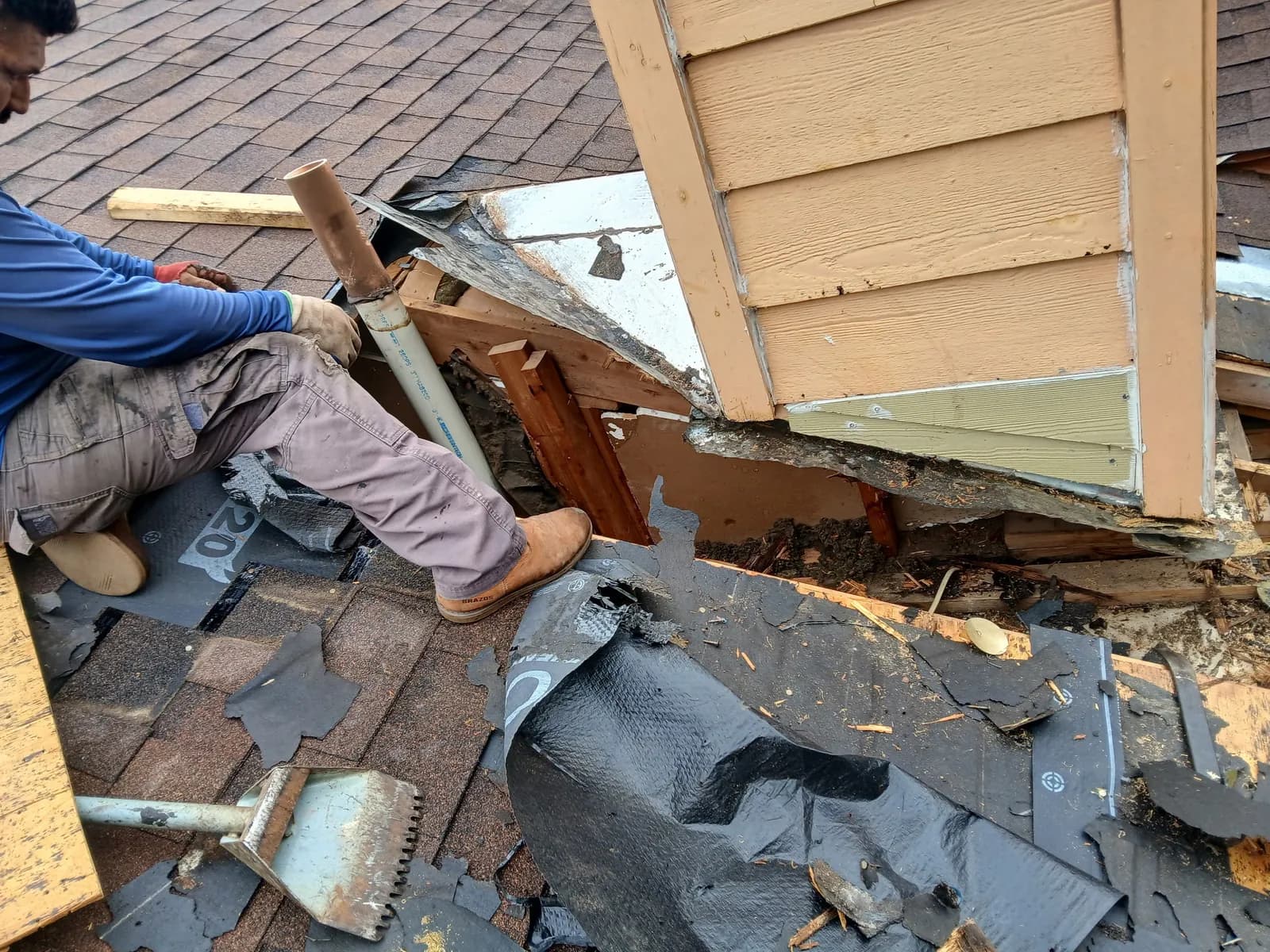
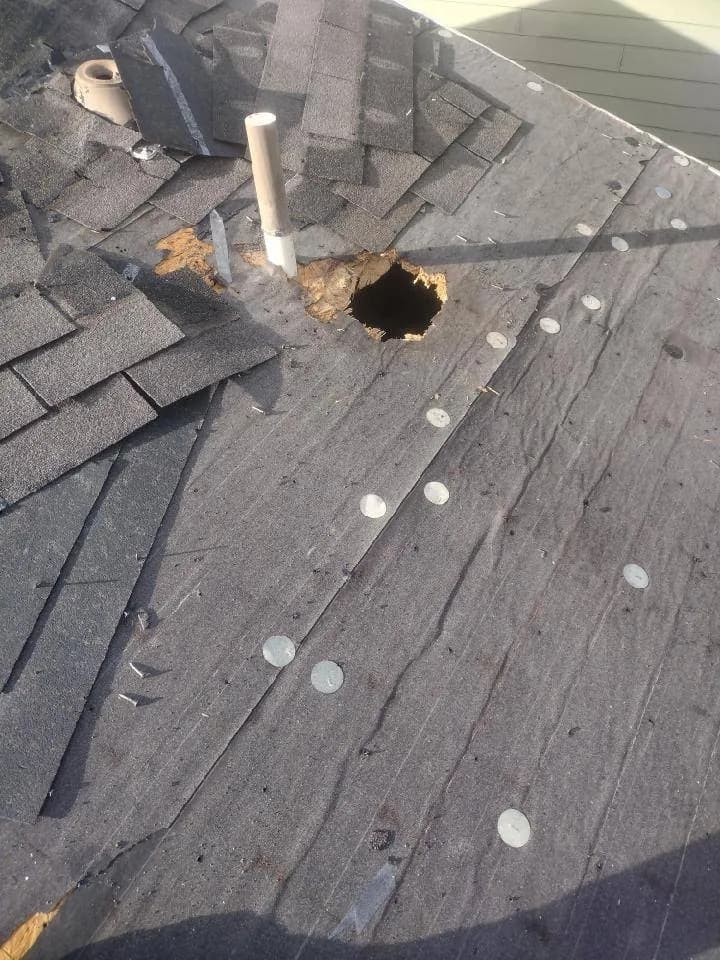
  2. Old underlayment comes off and we check the decking. Soft or rotted wood is cut out and replaced, the same as a roof decking replacement on a shingle roof.
  3. New underlayment goes down, plus new flashing at any wall, chimney or valley in that section.
  4. The same tiles go back on the battens and get fastened.

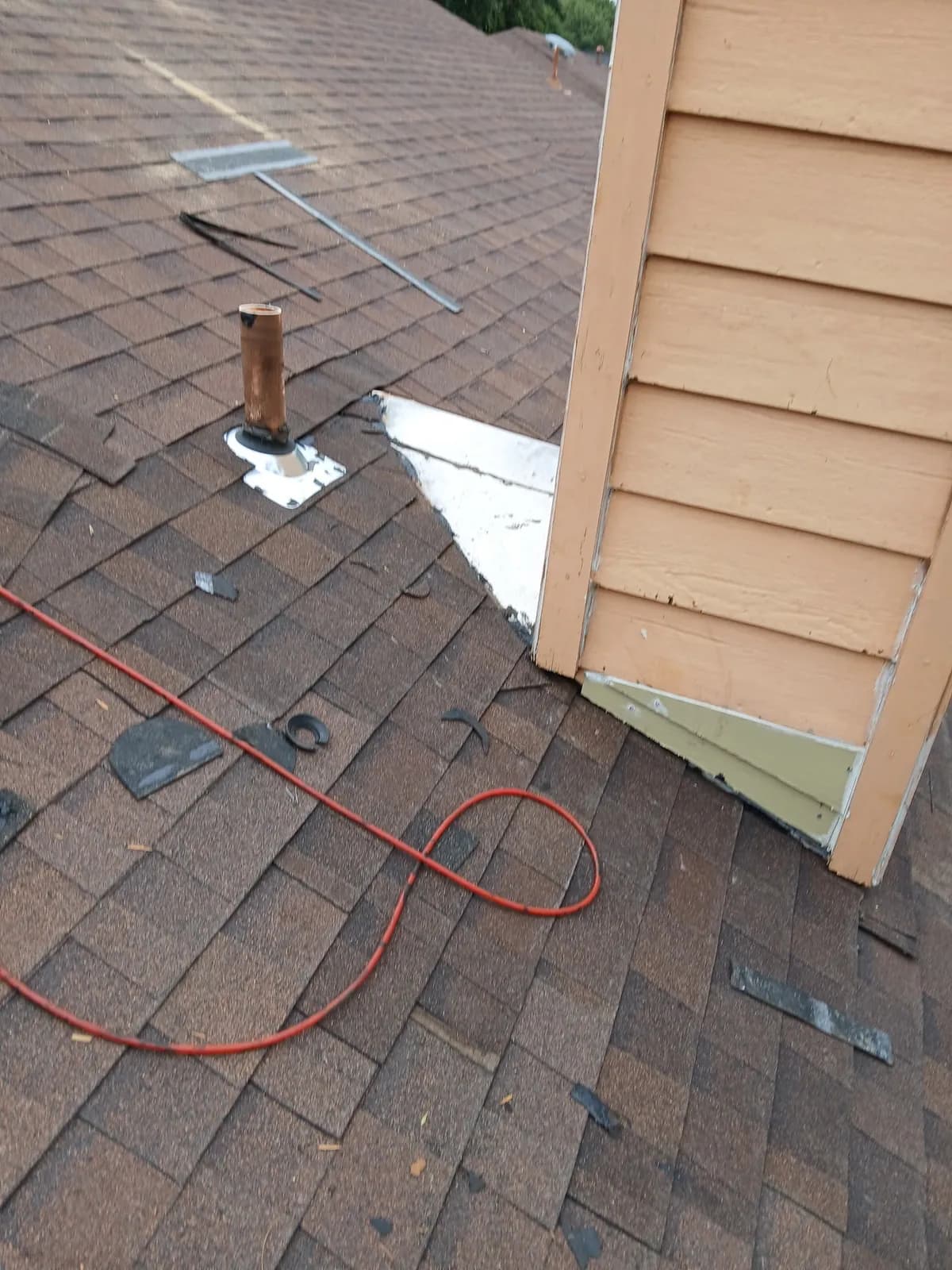
Flashing is worth its own paragraph. Headwall and chimney flashing, valley metal, and the mortar or ridge system along the hips and ridges all fail before the tile does. When ridge mortar cracks, water gets in at the very top of the roof and travels a long way before it turns into a stain. The metal side of that work is on our roof flashing repair page, and our roof leak repair page explains how we trace a leak from the attic up.

If the felt has failed all over a tile roof, we'd often rather replace the underlayment and reuse the tile than tear the whole thing off. Good tile is the expensive part, and it lasts. If it's sound, keep it.

Cracked tiles, slipped tiles and hail on a tile roof

Tile breaks for only a few reasons. Foot traffic is the big one: the satellite installer, the solar crew, the HVAC tech who walked the roof without knowing how. Limbs falling from live oaks and pecans come next, and then hail. Slipped tiles are their own problem. Once the nails or wire holding a tile corrode, it slides down out of its course, leaving a gap above it that lets water straight onto the underlayment.

How we walk a tile roof

We step on the lower part of each tile, where it overlaps the course below and rests on the batten. Never the middle of a pan. Never a barrel cover. On fragile old clay, the crew spreads its weight with pads or works off roof ladders. It's slower than walking a shingle roof, and it's the reason the repair doesn't leave fresh cracks behind. Please don't climb up and walk your own tile roof to check. A cracked tile is cheap to fix. A fall isn't.

Hail damage on clay and concrete tile

Big hail cracks concrete tile, and old clay doesn't do much better. The claim is the tricky part. Most tile roofs already have a few old cracks, so the adjuster's first question is going to be which breaks came from this storm. A fresh break has a clean, bright edge. An old one is dirty and weathered, sometimes with growth in it. Our in-house former insurance adjusters photograph and log the fresh breaks separately, then check the soft metals (vents, flashing, gutters) that pin down a hail date. Without that documentation, a valid tile claim can get written off as wear. The rest of that process is on our hail damage roof repair page and in our insurance claim help.

Water coming in right now? A tile roof can still be dried in. Our emergency roof repair crews cover the opening and come back for the permanent fix when the roof's dry.

Matching tile, historic homes and when repair stops making sense

Honestly, matching is the hard part of tile roof repair. Profiles get discontinued. Colors shift from one production run to the next, and concrete fades. We check whether your tile is still being made, and if it isn't, we show you the closest match available before any work starts. One fix we use a lot is moving original tiles off a hidden slope, say the back of the house or over the garage, to the front where they show, then putting the closest new match where nobody's looking. You decide what goes where.

Plenty of San Antonio's clay tile is on older homes, and some of those are in local historic districts. The city's Office of Historic Preservation requires a Certificate of Appropriateness for exterior work in historic districts and on landmarks, and the OHP design review page spells out which items staff can approve and which go to the commission. Repairing tile like-for-like is a very different conversation from switching roofing materials, so if your house is in a district, tell us up front.

So when is repair no longer worth it? When the underlayment has failed across most of the roof, the decking is soft in several spots, and the tile itself is breaking from age. That's a replacement conversation. Tile also weighs several times what an asphalt roof does, so the framing has a say. Our roof replacement page explains how we weigh tile against shingles and metal roofing, and you'll get both numbers in writing.

Texas-RRR is based in San Antonio. We're veteran owned, registered and insured, with 8 full crew teams and more than 2,800 projects completed. Call (210) 802-6906 or send a photo of the problem spot, and we'll set up a free estimate on your tile roof.

Tile Roof Repair questions, answered

Free estimates, Mon to Sat, 7 AM to 6 PM

Leak or Cracked Tile? Get a Free Tile Roof Estimate

We repair clay and concrete tile roofs all over San Antonio, whether it's a few cracked tiles or a full underlayment lift and relay. Registered and insured, with claim help if a storm's to blame. Call (210) 802-6906.

Call NowGet your Tile Roof Repair quote