
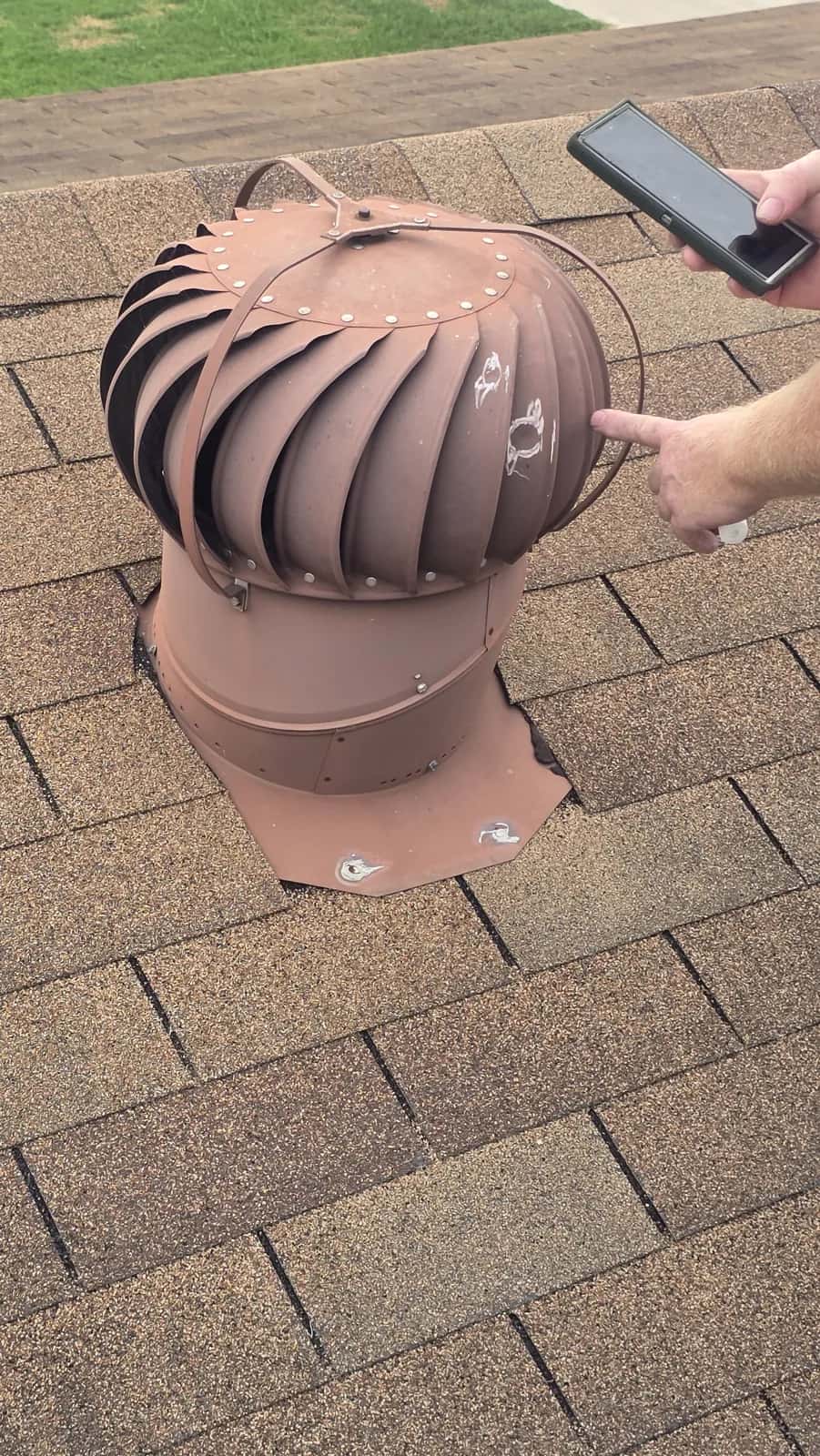


Inspector pointing at a weathered, rust-stained turbine vent on a brown shingle roof during a roof inspection

Storm Damage

Hurricane Damage Roof Repair in San Antonio, TX

Hurricane damage roof repair in San Antonio, TX, for roofs that catch the long tail of a tropical storm: hours of gusts, rain blowing sideways and limbs coming down, well after the system lost its name at the coast. Texas-RRR tarps open roofs when a crew's available, tracks wind-driven water through vents, soffits and flashing, dries out the attic side and documents it all for your claim with former adjusters on staff. Veteran owned, registered and insured. Free estimates.

  • Roof, vents and attic in one inspection
  • Tarping when crews are available
  • Wet insulation and decking replaced
  • Limbs off the roof first

Preferred
brands

Owens CorningGAF

Google5.016 reviews

  • Veteran Owned
  • Registered and Insured
  • San Antonio and Austin

What is included with hurricane damage roof repair

  • Roof, vents and attic in one inspection

    Tropical rain comes in sideways. So we check the turbines, ridge vents, soffits and wall flashing, then climb into the attic and follow the water.
  • Tarping when crews are available

    We strap synthetic tarps over the ridge and fasten them down with wood strips. The next rain band stays out of your ceiling.
  • Wet insulation and decking replaced

    Soaked insulation and sheathing can stay wet for weeks. We'd rather pull it out than shingle over it.
  • Limbs off the roof first

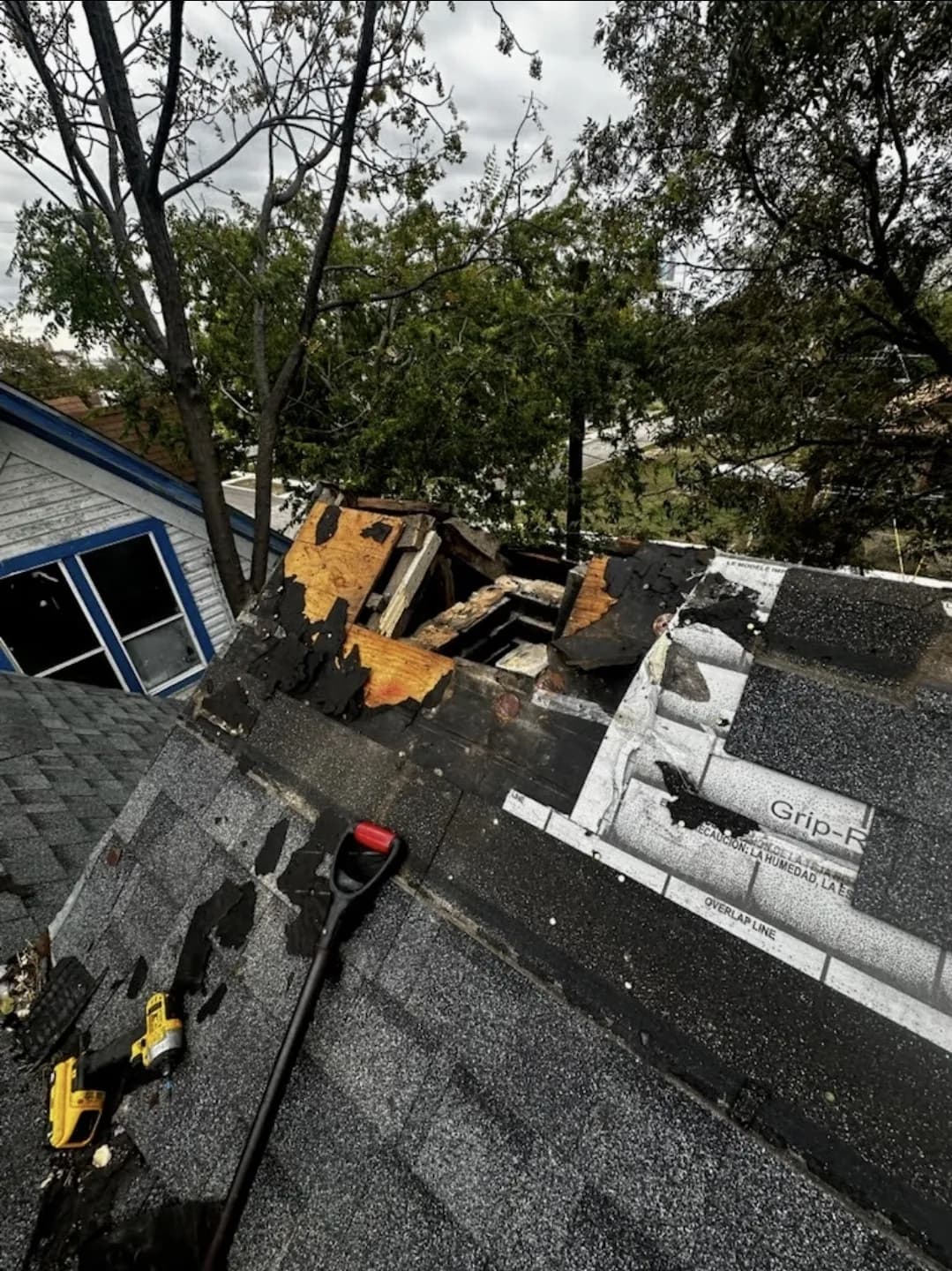
    Fallen limbs and debris come off before any repair starts. Otherwise nobody sees the decking underneath, and it doesn't get fixed.
  • Former adjusters on the claim

    Our team has 30+ years of insurance claim experience and knows how carriers split up tropical wind claims and water claims.
  • Ready before the season

    A pre-season check finds loose vents, lifted edges and worn-out flashing while the weather's still calm.

What a Hurricane Does to a Roof 140 Miles Inland

Corpus Christi is about 140 miles down I-37, and a Gulf system nearly always drops below hurricane strength before it gets this far. By then the National Hurricane Center may be calling it a tropical storm, or just a depression. So hurricane damage roof repair in San Antonio isn't coastal work. The gusts are lower. The storm just doesn't leave, though, and wind and heavy rain can sit over San Antonio for most of a day. That long, steady beating is why we treat it as its own kind of roof problem.

A short storm breaks the things you can see from the yard. A tropical one soaks the things you can't. After six hours of sideways rain, water has found every weak spot up there: a turbine vent with a loose collar, a ridge vent nobody baffled, the soffit vents on the windward side, step flashing where the roof meets a second-story wall. You can end up with a wet attic and not one shingle missing. Harvey proved it in 2017. The National Hurricane Center says it came ashore near Rockport on August 25 as a Category 4, and then it parked over Texas for days. On August 26, KXAN reported crews rescuing eight people and three pets from homes just east of Lockhart, which is nowhere near a beach.
How We Repair Hurricane and Tropical Storm Damage

After a tropical system moves through, the work goes in this order.

  1. Stop the water. Our crew clears fallen limbs and debris off the roof, and then an open or leaking roof gets a tarp as soon as a crew's available. If what you need is a quick permanent fix, the ticket goes to our emergency roof repair team.
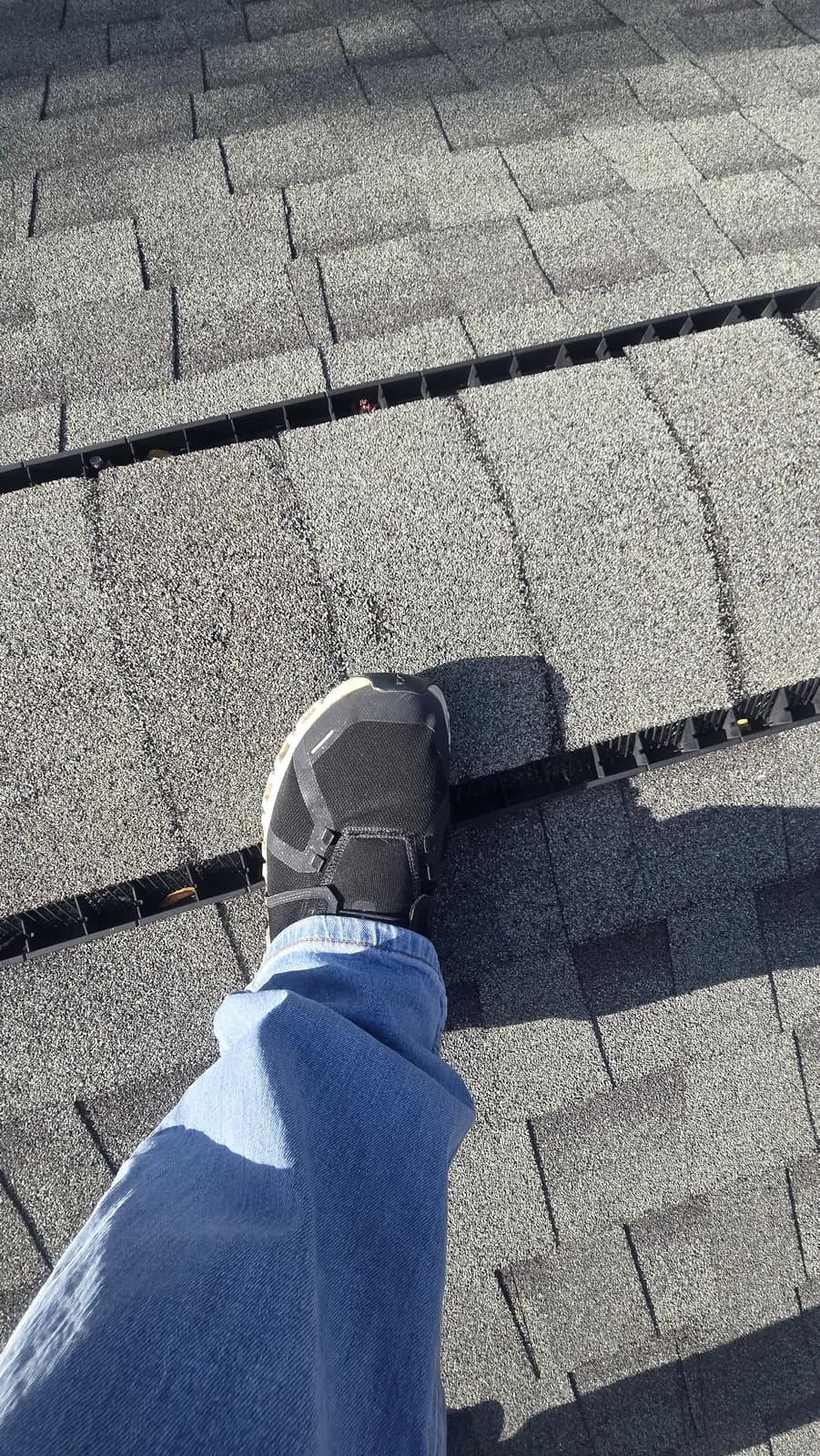
  2. Walk the roof. Every slope gets checked for lifted edges, torn ridge caps and missing shingles. We're especially careful around penetrations: vents, pipe boots, chimneys, skylights.
  3. Go into the attic. Skip this and you've done a wind inspection, not a hurricane one. We trace water stains back to where they came in, feel the insulation by hand, and probe the decking from underneath for soft spots.
  4. Dry out and replace. Wet insulation comes out. Once it mats down it loses much of its insulating value, and it holds moisture against the drywall. Soaked decking gets cut out and replaced. On a hurricane water claim, wet insulation and drywall are usually their own line items, so we make sure they're on the scope your adjuster reads.
  5. Rebuild the weak points. Where it makes sense, we swap in better-sealed vents. Walls and chimneys get reflashed, and anywhere the wind broke shingles, matched Owens Corning or GAF shingles go back on.

If it's creased or blown-off shingles and the attic is dry, the job's closer to our wind damage roof repair work. Did hail come in with the rain bands? Our hail damage roof repair process handles the impact side. A lot of tropical storms leave all three behind, and we treat that as one job.

The Insurance Side of a Tropical Storm Claim

Spring thunderstorms don't raise these questions. A tropical storm does, starting with who insures the wind. The Texas Windstorm Insurance Association covers designated coastal counties, and Bexar County isn't one. In San Antonio, hurricane wind damage goes through your regular homeowner policy, usually under its wind and hail deductible. In Texas that deductible is often a percentage of your dwelling coverage, not a flat dollar amount, which surprises people.

Then there's the water. Policies handle rising water and falling water completely differently. If floodwater rises into the house, that's generally a separate flood policy. If rain got in because the storm damaged the roof or blew a vent open, that's another matter, and the interior damage often belongs on the homeowner claim. So the photos have to tell the whole story. Our in-house staff includes former insurance adjusters, and they shoot the entry point on the roof, the path through the attic and the damage in the rooms below, so the carrier sees one connected chain. They bring 30+ years of insurance claim experience when they meet your adjuster on site, too. For more on that side, see our wind damage insurance claims page. All six steps are on the insurance claims page.

C. Ybarra wrote this about our crews after Harvey: "In the middle of helping victims from Hurricane Harvey, their team managed to replace my roof in one day."

Getting a San Antonio Roof Ready for Hurricane Season

NOAA's Atlantic hurricane season runs June 1 through November 30. Fix a weak roof before there's a storm in the forecast, not during. A pre-season check takes an hour of your time and can save a ceiling. We go after the parts that give out first in a long tropical rain, like vent collars and turbines, ridge vent baffles, pipe boots the sun has cracked, wall flashing, and eave shingles that have lost their seal. Check the overhanging limbs too. With the ground soaked and the wind steady, branches come down that would've ridden out a quick thunderstorm.

And after the storm? Get the water stopped. Then wait a day before you sign anything. Every big Gulf system brings out-of-town crews, and when the calls dry up they leave, along with anyone you could call about a bad repair. Texas-RRR is based in San Antonio, with 8 full crew teams and 2,800+ completed projects. Look through our storm damage repair services, or request a free estimate and tell us what the storm left you with.

Hurricane Damage Roof Repair questions, answered

Free estimates, Mon to Sat, 7 AM to 6 PM

Tropical Storm Come Through? Check the Attic, Then Call Us.

Go look for wet insulation, drips around the vents or ceiling stains, and send photos if you can get them. We'll inspect the roof and the attic, tarp it if water's still coming in, and sit in when the adjuster comes. Every hurricane damage roof repair in San Antonio starts with a free estimate.

Call NowFree estimate