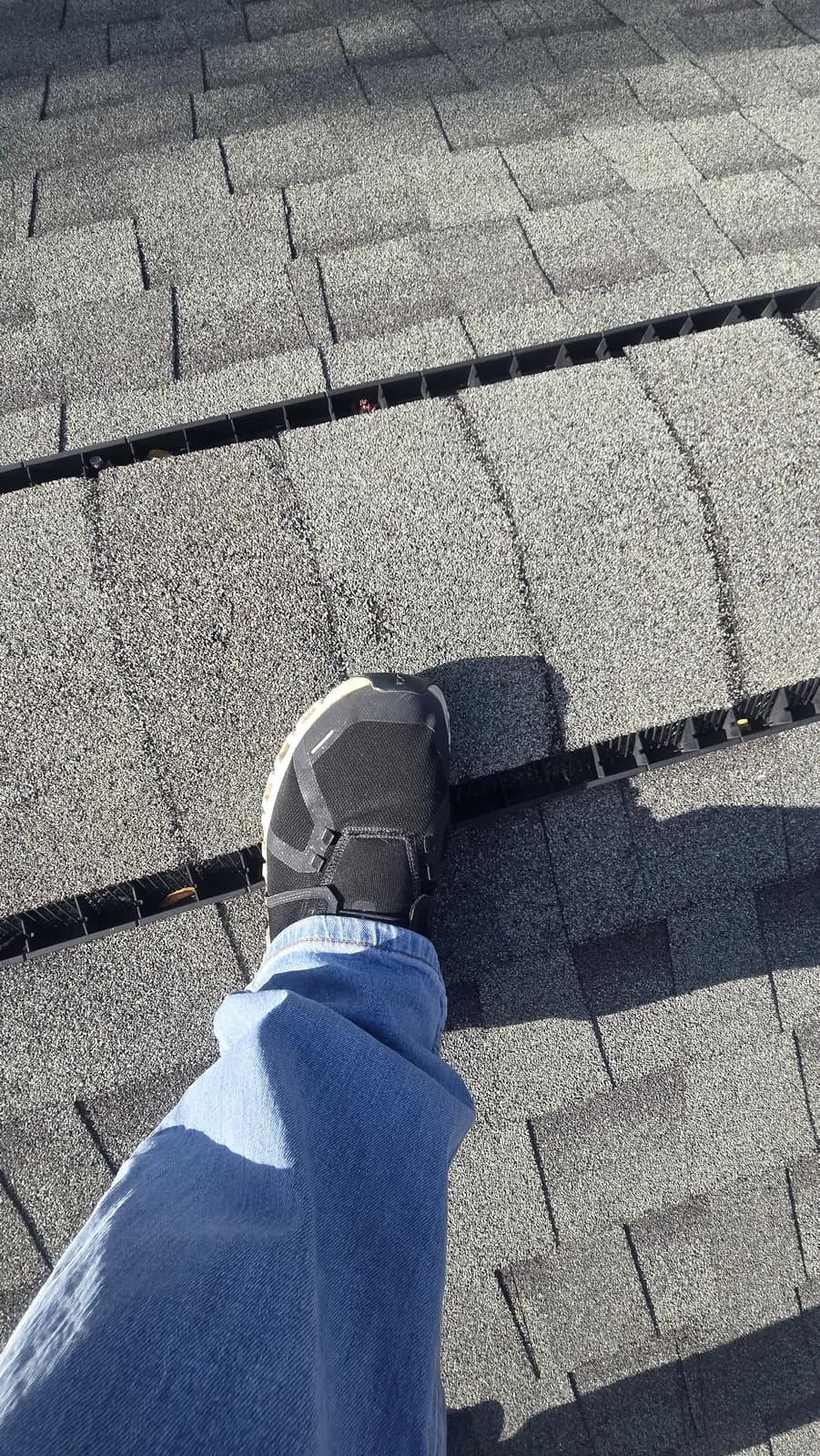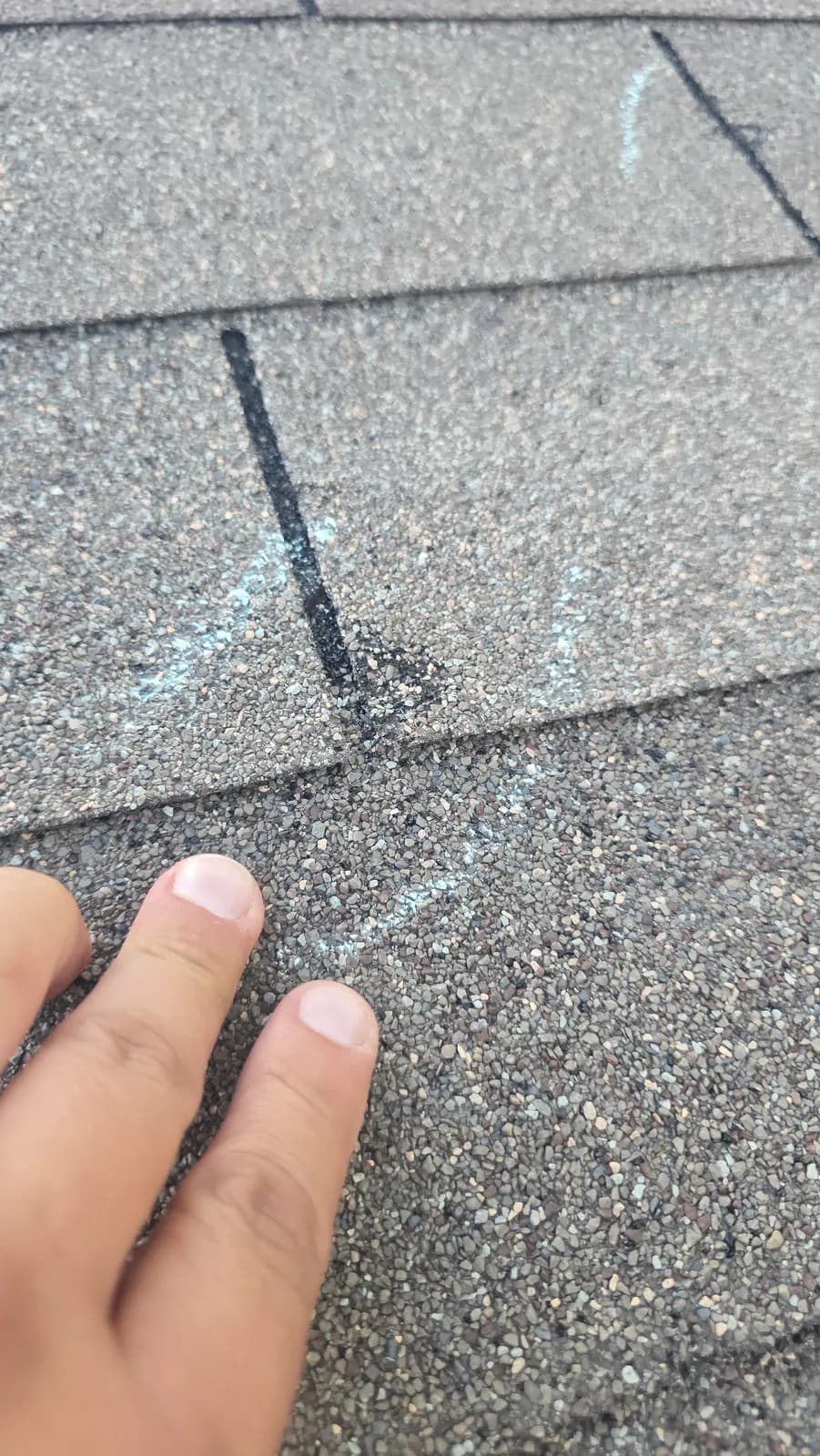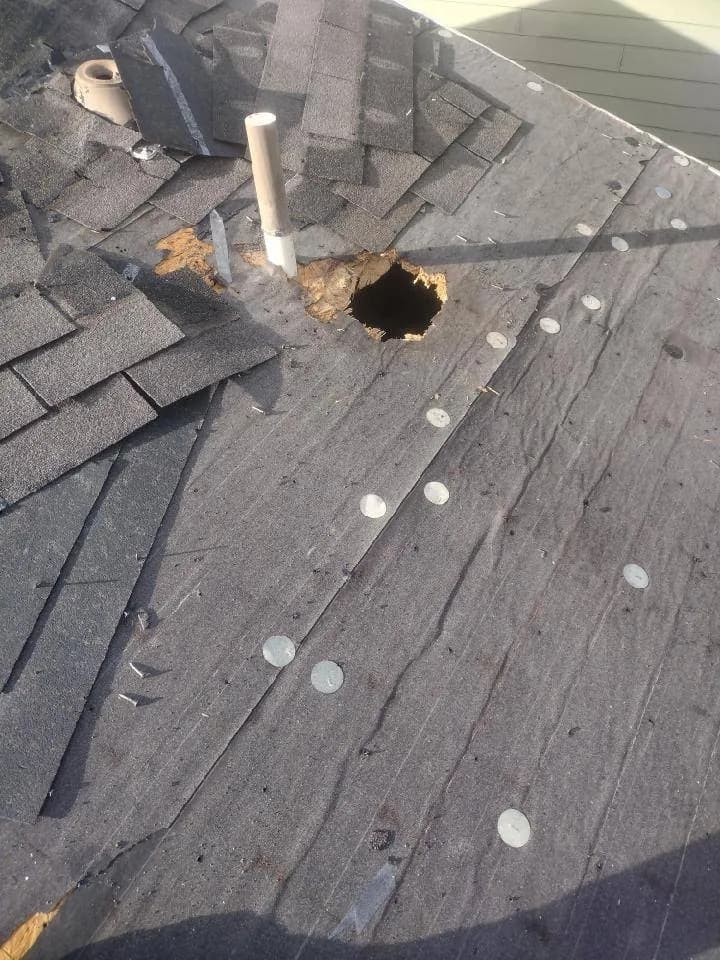
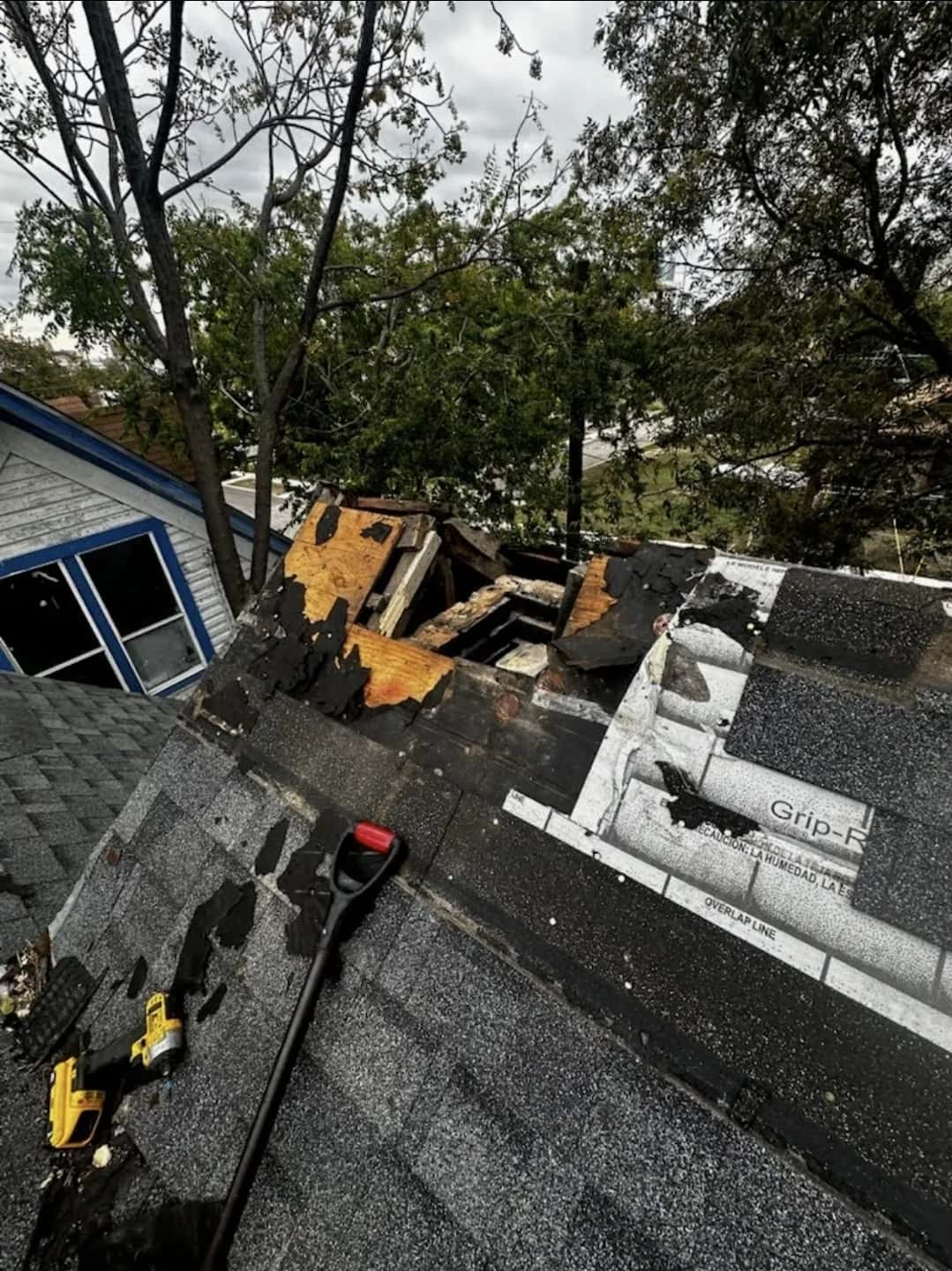
The morning after a Texas storm, a lot of people walk out and find tabs of shingle in the flower bed. Missing shingles after wind are about as common a call as we get, and plenty of those roofs only need a repair. Still, what's lying in the yard rarely tells you everything. Most wind damage happens to the shingles that stayed on the roof, where the seal holding each one down gets broken, and you can't see that from the driveway. That hidden part is what decides repair or replacement.
So here's how to figure out which camp you're in, what to do this week, and how insurance usually looks at it.
Why Wind Pulls Shingles Off in the First Place
Two things hold an asphalt shingle down. Nails, and a strip of factory-applied adhesive called the seal strip. The Texas sun softens that strip until it bonds each shingle to the one below it, and the whole roof ends up acting like one connected layer. A gust that gets under a shingle's leading edge has to beat the seal strip first.
If the seal holds, nothing happens. If it lets go, the shingle starts flapping, the nails tear through the mat, and sooner or later the piece is gone.
Wind doesn't hit a roof evenly, either. It piles up at the edges: rakes, eaves, ridges and hips get the hardest uplift, so the bare spots usually show up there. Straight-line winds off a squall line can strip a ridge in seconds; the National Weather Service recorded a 77 mph gust at Austin-Bergstrom International Airport during the May 28, 2025 microburst. Age makes it worse. After 15 or more Texas summers the shingles go brittle and the seal strip dries out, and a 50 mph gust a newer roof would shrug off can peel up whole courses.
Then there's how the roof went on. Shingles nailed too high, above the manufacturer's nail line, miss the overlap and hold with about half the grip they're supposed to have. We see it a lot on wind-damaged roofs.
Repair or Replace: How to Tell
Every roofer has a rule of thumb. Ours: a handful of missing or creased shingles on one slope, on a roof under about 12 years old, with the rest still sealed tight, is usually a repair. The crew matches the shingle as closely as they can, swaps out the damaged pieces and hand-seals the tabs around them. You're done in an afternoon.
Things change once the damage spreads past what a crew can fix without disturbing its neighbors. You can't pull a shingle without breaking the seal on the courses above it, and on an older roof those may never reseal right. A good roofer talks that risk through with you instead of pushing the biggest ticket. If a repair would do more harm than good, you ought to hear it before anybody sets a ladder. And if a repair makes sense, you should hear that too, even when a claim might pay for more.
These are the signs that push it toward replacement:
- Unsealed shingles across the field. Gently lift a tab. If tabs come up with no resistance all over the slope, the seal has failed roof-wide, and every storm from here on takes more.
- Creases. A horizontal line across a shingle means it folded back in the wind, and the mat is broken even though the shingle never left.
- Damage on two or more slopes, not just one exposed corner.
- Brittle shingles that crack when a roofer lifts them to make the repair. A roof that breaks every time you touch it can't really be patched.
- A discontinued shingle. Nobody makes that color and profile anymore, so a patch will stick out, and your insurer may not accept it.
People get caught by that last one. Shingle lines change every few years, and the color you picked in 2012 may be long gone. Matching rules differ by policy and by carrier, so ask your adjuster how they handle a repair that can't be matched before work starts. Our wind damage roof repair page shows the creasing and seal failure we look for. What a full re-roof involves is on our shingle roof replacement page.
What to Do in the First Few Days
Stay off the roof. Especially a steep one, especially wet.
Walk the yard instead and collect any shingles or pieces you find, since a roofer can often identify the product from them. Shoot photos from the ground, yard debris included, with the date showing. Then take a flashlight into the attic and look for daylight, wet decking or damp insulation. Bare felt underlayment showing up top buys you a little time, but it isn't made to sit out in Texas sun or rain for weeks.
Next, get the open spot covered. A missing ridge or a patch of bare underlayment can leak in the next shower, and once water gets inside the house a small repair isn't small anymore. Water already coming in? Our guide to a roof leaking during a storm covers the first hour. For anything urgent, our roof repair crews can tarp or patch the opening when they're available after a storm.
How Insurance Treats Missing Shingles After Wind
Most Texas homeowners policies cover wind. Whether a claim actually pays comes down to two things.
First, your wind and hail deductible. On many Texas policies it's a percentage of your dwelling coverage, commonly 1% or 2%, and fixing four or five missing shingles almost never gets past that number. If that's you, skip the claim and just pay for the repair. A claim that pays nothing can still land on your claims history. Our post on wind and hail deductibles in Texas shows you how to turn that percentage into dollars.
Second, whether the adjuster reads the roof as storm damage or old age. Brittle, unsealed shingles on a 20-year roof can get written off as wear and tear. Fresh creases, torn nail holes and a clear storm date argue the other way. When a documented storm has broken the seal strip across the whole roof, carriers often pay for a replacement, because no repair can bring that bond back. You'll need good evidence to make that case, and it really helps to have a roofer who knows how adjusters inspect wind damage. Yard photos of the shingles, the storm date and a note of what the weather service reported for your area all tie the damage to one event rather than years of slow decline.
Texas-RRR's in-house staff includes former insurance adjusters. During a free inspection we can tell you whether your wind damage is worth a claim, and if it is, our insurance claims process picks it up from there.
Preventing the Next Blow-Off
Replacing the roof anyway? Ask about wind-rated shingles. Products tested to ASTM D3161 Class F or ASTM D7158 Class H carry the higher wind ratings, and Owens Corning and GAF both make lines that meet them when they're installed to spec. Honestly, the install details count for more than the label. We mean nails right on the nail line, six nails per shingle in high-wind zones where the manufacturer calls for it, adhesive starter strip along every eave and rake, and a ridge cap that's sealed properly. Wind goes after those spots first.
Want to know more about the storms themselves? Read straight-line wind roof damage and Central Texas hail season. If hail rode in with the wind, what size hail damages a roof will help you read the marks.
Missing shingles after wind won't fix themselves, and the next storm tends to take a few more. Call Texas-RRR at (210) 802-6906, Monday through Saturday from 7 a.m. to 6 p.m., or request a free inspection. We'll tell you straight whether it's a repair or a new roof.
Related services
Wind Damage Roof Repair from Texas-RRR, with a free estimate before any work starts.

Written by
Owner, Texas-RRR (veteran owned) · 30 years of roofing experience · Team with 30+ years of insurance claim experience · In-house former insurance adjusters · Registered and insured