

What TPO Roofing Installation Involves
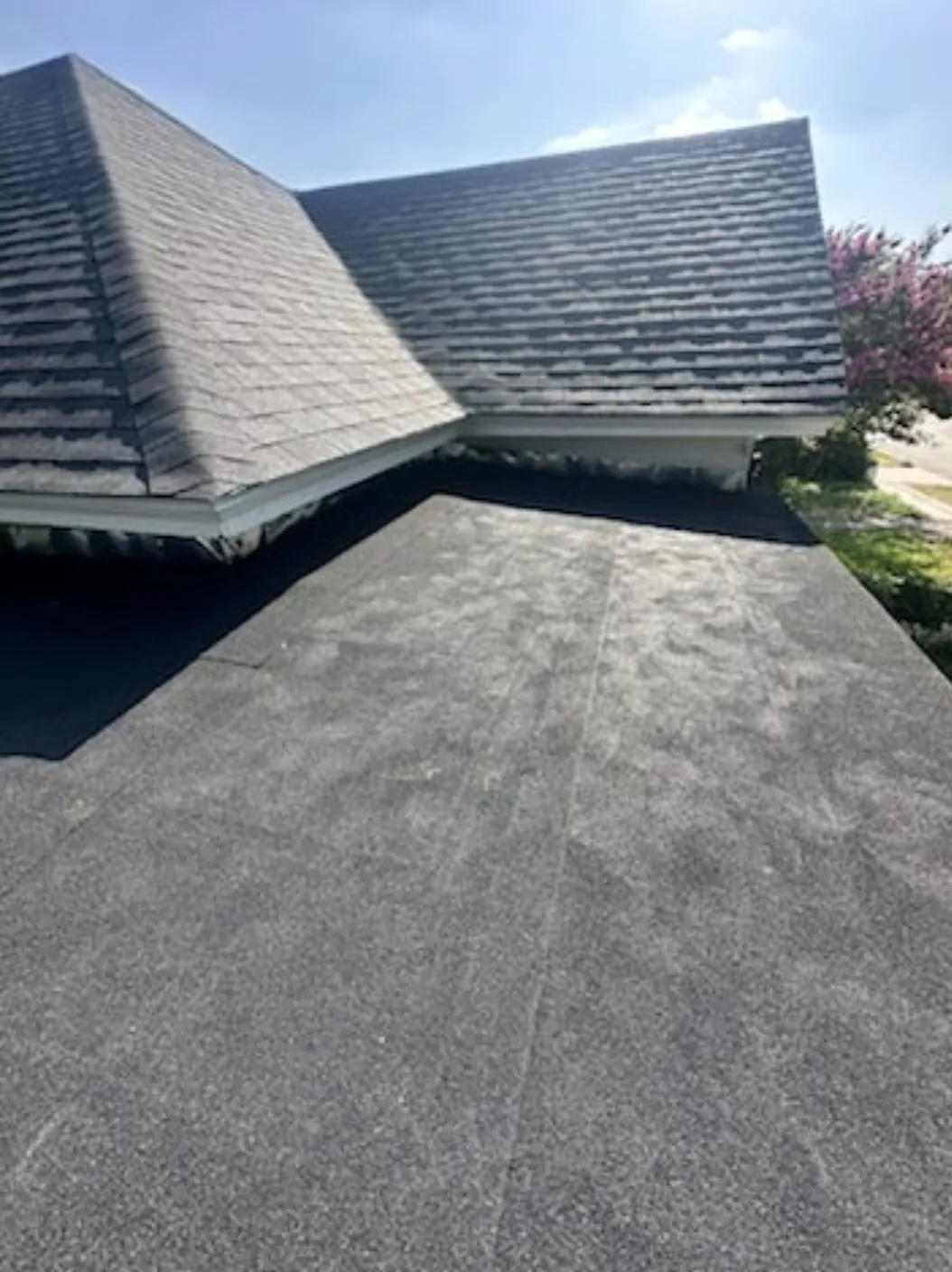
TPO stands for thermoplastic polyolefin, a single-ply membrane made for flat and low-slope roofs. It shows up in wide rolls. The crew fastens or glues it to insulation board over the deck and then welds every seam shut with hot air, so you end up with one continuous waterproof sheet and no exposed fasteners.
A TPO roofing installation in San Antonio with our crews usually goes like this:
- Inspection and moisture check. We walk the old roof, probe for wet insulation and look at the deck from below wherever we can get to it. Wet insulation comes out. We won't bury it.
- Tear-off or recover. One dry layer on a sound deck can take a recover board and new membrane right over it, which saves you tear-off labor and landfill fees. A soaked roof, or one that'd be the third layer, comes off.
- Insulation and cover board. Polyiso sets the slope and gives the building the R-value it needs. On top goes a cover board, so the membrane has something firm under it. It handles hail better than bare foam, too.
- Membrane and seams. The TPO sheet gets mechanically fastened or fully adhered, then each lap is hot-air welded and probed.
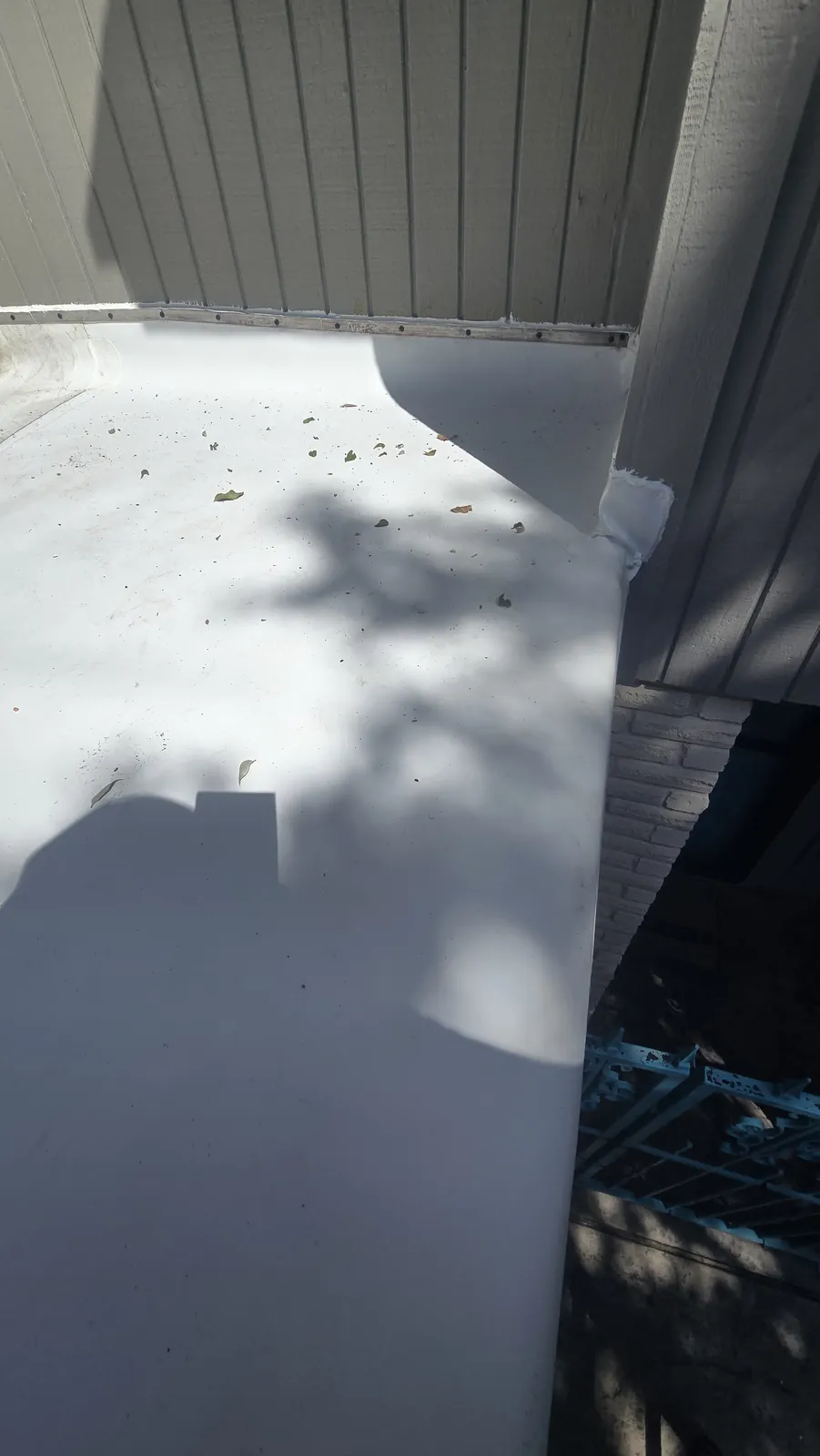
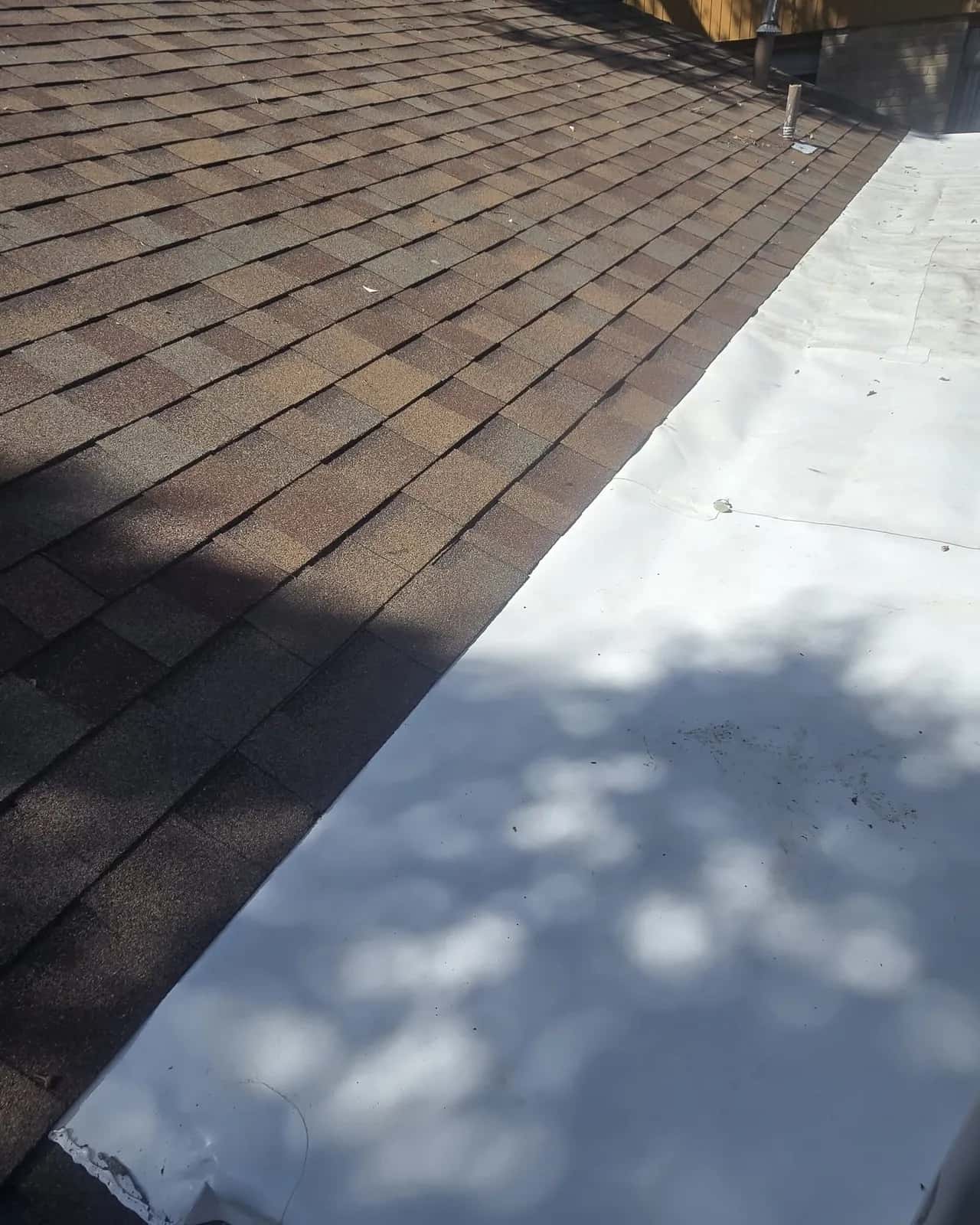
- Flashing and details. Curbs, drains, scuppers, parapet walls and the line where a shingle slope meets the membrane (there's one in the photo above) get TPO-coated metal, welded corners and sealed terminations.
- Final walk and cleanup. Seams get probed a second time, we run magnets for dropped fasteners, and you get the scope paperwork.
Square footage matters less to the schedule than the weather does.