Commercial and HOA Roof Insurance Claims After Hail: What Property Managers Need to Know
By Charlie Carreon, Owner7 min read
From the parking lot, a commercial roof insurance claim after a Texas hailstorm doesn't look much different from a homeowner's. The storm rolls through, the roofs take a beating, someone calls the carrier. Get closer and it changes completely. There could be a dozen buildings involved, a board that has to vote, tenants calling in leaks, and a policy loaded with deductibles and exclusions you won't find on most homeowner forms.
This one's for people running an apartment complex, an HOA with a pool house and rec center, or a row of retail buildings. We'll cover what's different and what to get done in the first month. And a quick caveat: we're roofers, so none of this is legal advice. Commercial policies change from building to building and carrier to carrier. The one in your filing cabinet decides what gets paid.
How commercial and HOA claims differ from homeowner claims
Start with the policy. Residential coverage mostly follows standard forms. Commercial property policies get negotiated, endorsed and customized, which is how two complexes facing each other across the same street can end up with different coverage for the exact same hail.
You'll run into four terms over and over on a commercial roof insurance claim:
- Percentage wind and hail deductibles. Often calculated per building or per occurrence, as a percentage of each building's value on the policy. Add those up across a multi-building property and it gets big quickly.
- Roof payment schedules. Some policies don't pay full replacement cost on a roof. They pay on a depreciation schedule tied to how old it is.
- Cosmetic damage exclusions. You see these a lot on metal roofs. When the dents don't hurt the roof's ability to shed water, the policy may not cover them.
- Coinsurance. Carry less coverage than the building's value calls for and the carrier can trim the payout.
Then you've got the chain of sign-offs. A homeowner approves their own roof, done. An HOA usually needs a board vote, maybe a look at the reserve study, and a manager pulling it all together. It's slow on purpose.
The policy clock won't wait for the next board meeting, though.
The first 72 hours after hail
People underestimate how much speed matters on flat and low-slope roofs, which are good at hiding damage. A membrane bruised by hail can go weeks without leaking, and by the time somebody spots a ceiling stain, the insulation under a whole section may be soaked.
Stop active leaks first
Your policy almost surely asks you to take reasonable steps to prevent more damage. Put plainly, you can't let a leak you know about keep running into units for two weeks while the adjuster's schedule catches up. Tarp or temporarily patch anything that's open, and save every invoice. Carriers generally reimburse reasonable emergency repairs as part of the claim. They'll want the paperwork, though.
Notify the carrier in writing
Report the loss fast and get a claim number. Most commercial policies want notice inside a set window, and late notice is about the easiest excuse you can hand a carrier. Write down the storm date, which buildings were hit and a short description, and send it.
Tell tenants and owners what's happening
Send residents or tenants a short notice. It'll keep your phone quieter all week and tells them when to expect roofers. Ask for leak reports with photos and unit numbers, and keep the log.
A post-hail inspection checklist for property managers
Please don't send a maintenance tech up on a wet roof. When it's safe, have a roofer walk every building. A thorough commercial inspection hits all of this:
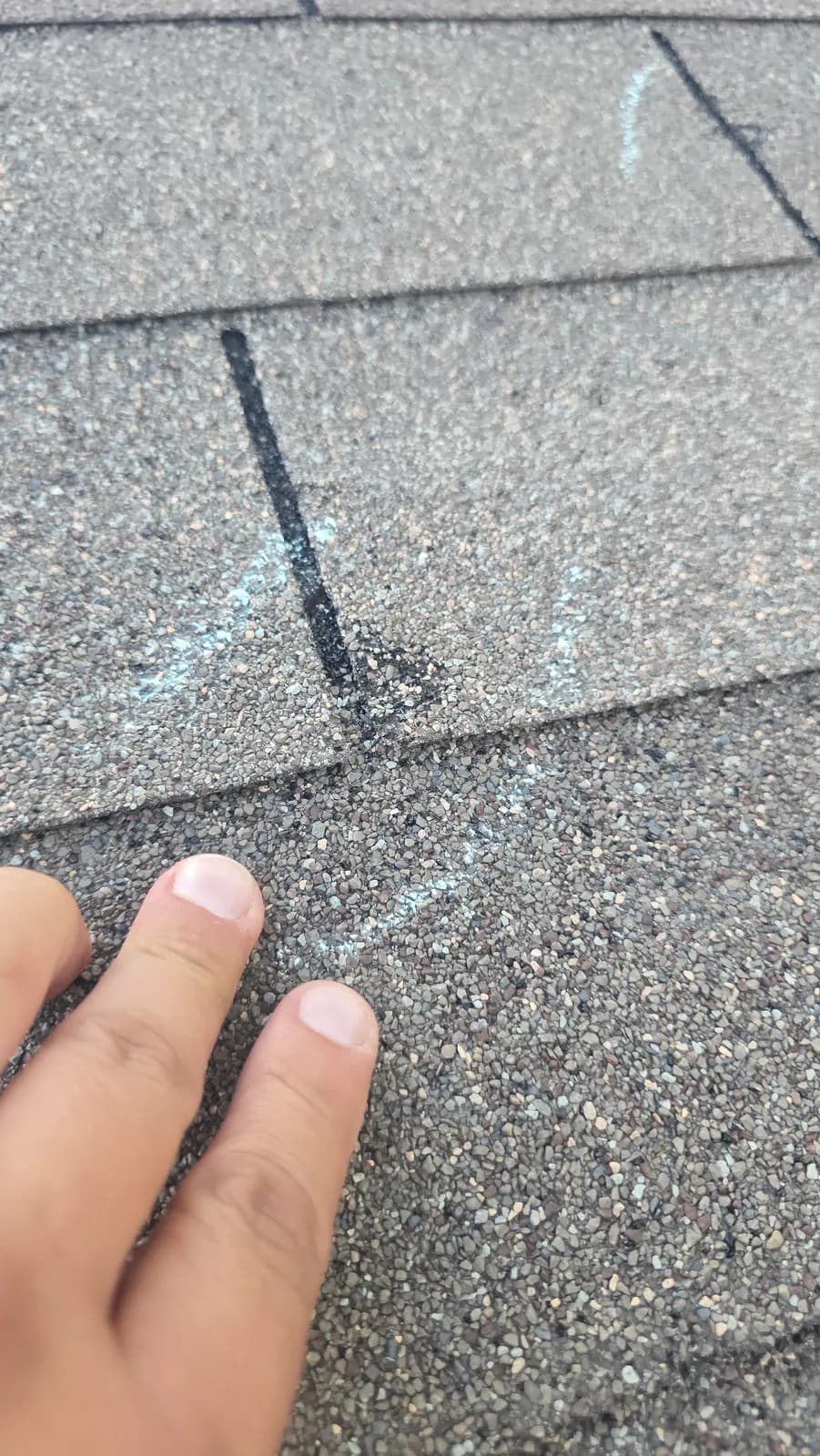
- The membrane surface on TPO, modified bitumen or built-up roofs, with each hail strike circled and shot next to a scale reference
- Seams and laps, since a direct hit can split them
- Rooftop HVAC units: bent fins, dented cabinets, cracked condensate lines
- Soft metals (vents, caps, coping, gutters) that hold a record of hail size
- Any skylights and the curbs around them
- Insulation below the membrane, with test cuts or moisture scans wherever the strikes look bad
- Sloped roofs on clubhouses, pool buildings and townhomes, inspected like you'd inspect a house
- Top-floor units, looking for fresh stains or wet ceiling tiles
Membrane roofs are sneaky. Hail can crush the insulation board underneath while the surface looks perfectly fine from above, and on a commercial claim, one roof section can sit over thousands of square feet of that insulation. So test cuts and core samples carry a lot of weight. Skip them and the whole thing turns into "looks fine to me" against "trust us."
You'll lose that argument.
If you're trying to make sense of an adjuster's report, our flat roofing page explains how these membrane systems are put together.
Documentation that holds up with a commercial adjuster
Commercial adjusters handle a lot of claims and don't have much time. The ones that move are organized building by building. Set yours up like this:
- A site map, with every building labeled the same way the policy labels it.
- One folder per building holding dated photos of each slope or section, close-ups of strikes and soft-metal dents, and any HVAC damage.
- The storm date, backed by a weather source like National Weather Service local storm reports or a hail history report.
- The tenant leak log, with dates and unit numbers.
- Prior inspection reports or maintenance records that show what the roof looked like before the storm.
Most properties don't have that last one, and it costs them. When a carrier says the damage is old wear, a prior inspection report is the best answer you've got. For photo technique (scale references, slope-by-slope folders, the shots adjusters ask for most), see our guide on how to document roof damage for insurance.
Timelines, deadlines and Texas rules worth knowing
Most first-party property claims in Texas fall under a prompt payment law. Chapter 542 of the Texas Insurance Code generally gives an insurer 15 days after notice to acknowledge the claim and begin investigating, 15 business days after it receives the information it asked for to accept or reject, and 5 business days after approval to pay. Extensions and exceptions exist, surplus lines carriers among them, so check how it applies to your policy.
Heading toward a lawsuit? Chapter 542A of the same code calls for written pre-suit notice, generally at least 61 days before filing. Talk to an attorney about that one, not a roofer. Still, it helps to know these rules are there, since they shape how carriers handle big commercial claims. If you think a carrier isn't playing by them, the Texas Department of Insurance takes complaints.
Read your own policy's suit limitation and claim reporting provisions, too. Some commercial policies set deadlines much shorter than owners expect. Miss one and nobody can fix it later.
A denied or underpaid commercial roof insurance claim isn't the end of the road. Our post on what to do after a roof claim denial covers re-inspections and appraisal, and the full roof insurance claim process in Texas is laid out step by step.
Picking a roofer for a multi-building claim
A commercial or HOA claim needs a crew that's good at two separate things. First, documenting damage so an adjuster takes it seriously. Second, actually repairing or replacing a whole row of buildings without turning your residents' lives upside down. Ask how many crews they run, how they phase work across buildings, and whether they've done pool facilities, rec centers and apartments before.
We run 8 full crew teams at Texas-RRR, and former insurance adjusters are part of our in-house staff, so we can meet your carrier's adjuster on each roof and go over the evidence together. Our commercial roof repair crews work on flat and sloped systems. How we work with boards and managers is on our HOA and multi-family roofing page, and if you're mid-claim right now, our insurance claim help page explains each step. Contact us for a free inspection and estimate. We'll start by walking your property one building at a time.
Related services
Commercial Roof Repair from Texas-RRR, with a free estimate before any work starts.

Written by
Owner, Texas-RRR (veteran owned) · 30 years of roofing experience · Team with 30+ years of insurance claim experience · In-house former insurance adjusters · Registered and insured