Does Homeowners Insurance Cover Roof Replacement in Texas?
By Charlie Carreon, Owner8 min read
Picture a 12-year-old roof that took one bad spring storm. Around here that's the normal case, not the odd one. So does homeowners insurance cover roof replacement in Texas? If a covered storm did the damage, yes. If the roof simply wore out, no. That settles most of it, and the rest of this post is about the gray area in between, which is where most Texas homeowners actually end up.
We hear the question after every storm season, and the answer follows a pattern you can learn. Homeowners who understand how their policy looks at a roof get a fair result a lot more often than the ones who assume the carrier will sort it out for them.
What a Texas Homeowners Policy Actually Covers on a Roof
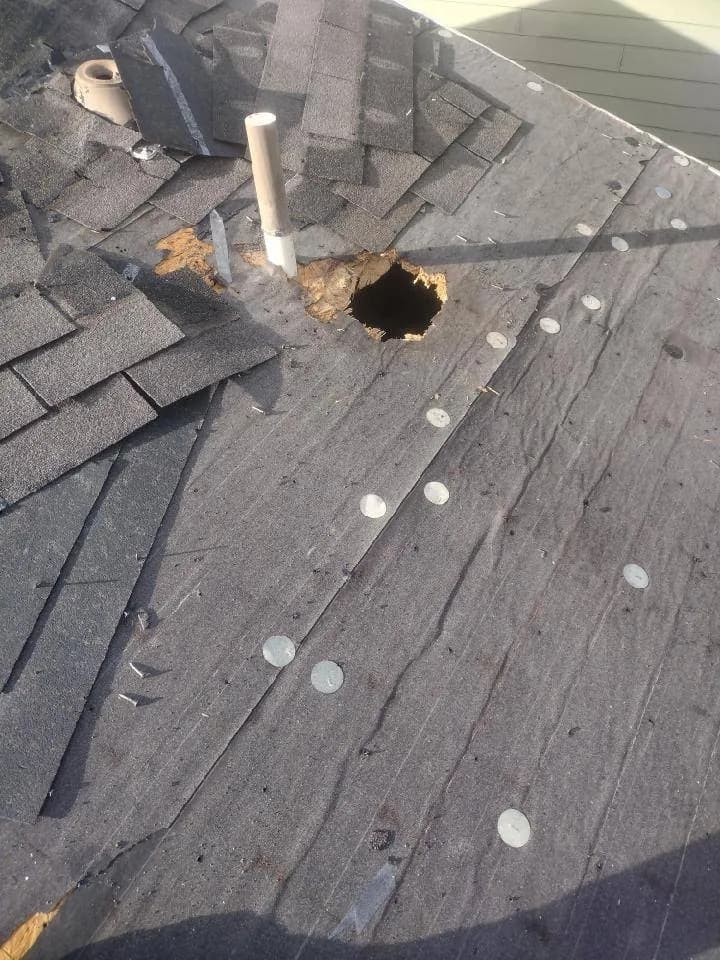
The typical Texas homeowners policy covers "sudden and accidental" physical loss. On a roof, think of a specific event on a specific date: a hailstorm, a windstorm, a tree limb punching through the decking, a fire. If one of those wrecks the roof badly enough that repair isn't practical, the policy pays to replace it, less your deductible.
Slow decline is another story. Granules worn off over 20 summers, flashing rusted through, nail pops from a sloppy install, a roof that's simply reached the end of its life: carriers file all of that under wear and tear or maintenance, and nearly every policy excludes it. Honestly, that's fair. These policies exist to pay for surprises, and a 20-year shingle giving out in year 22 surprises nobody.
It gets messy when both things are true. Lots of Texas roofs are older and also took a real hailstorm, and then the adjuster leans on the age while you lean on the storm. Evidence decides it. Are there fresh, storm-pattern impacts across the slopes? Do they line up with a storm that actually hit your address?
Trying to figure out which side of that line you're on? Our roof insurance claim help starts with a free inspection that answers it before you ever file.
Hail and Wind: The Two Big Reasons Texas Roofs Get Replaced
In NOAA Storm Prediction Center records, Texas logs more hail reports than almost any other state, and Central Texas is right in the path. People still talk about the April 12, 2016 storm, which dropped hail up to 4.5 inches on northwest Bexar County, and the September 24, 2023 storm that put hail up to about 4 inches on Round Rock, per National Weather Service storm reports. Lots of smaller storms do quieter damage every spring.
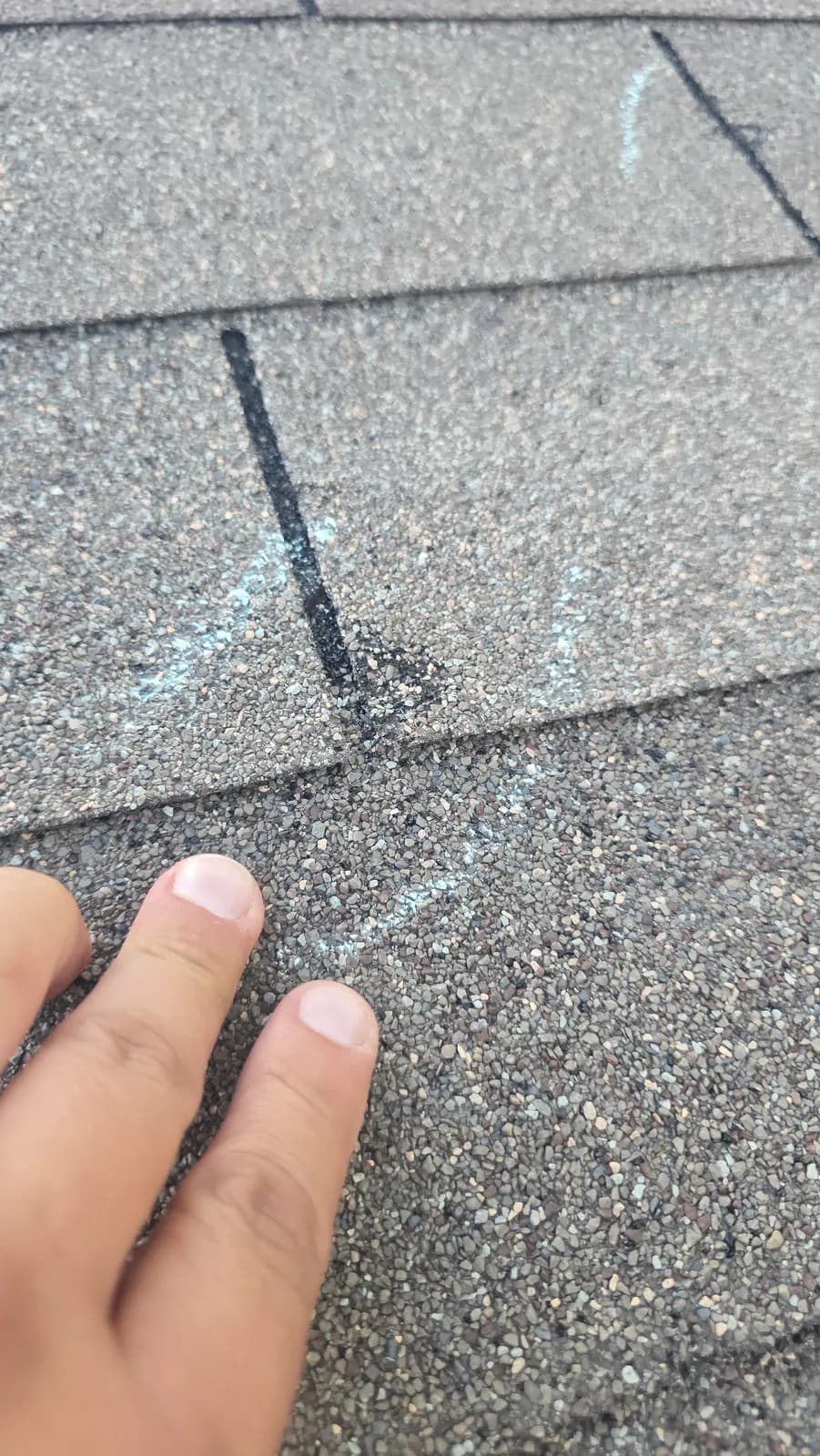
On asphalt shingles, hail leaves bruises, soft spots and fractured mats where stones knocked the granules loose. One or two hits on a slope won't get you a full replacement. A steady pattern of hits across several slopes often will. Shingles are sold as a system, and no carrier can make a fresh patch match a weathered roof. You can see those hits up close on our hail damage roof repair page.
Wind works differently. It creases shingles, breaks the seal strip and peels tabs off the ridge and rakes. Three or four missing shingles? A crew can often patch that in an afternoon. A seal strip that's failed across an entire slope is a bigger deal, because those shingles will keep lifting in every storm that follows, and that's an argument for replacement. If that sounds like your roof, we've got a separate guide on missing shingles after high wind.
ACV vs. Replacement Cost: The Detail That Decides Your Check
Almost nobody reads this part of the policy until it costs them. Roof losses get settled one of two ways.
Replacement cost value (RCV)
RCV pays what it takes to put on a new roof of like kind and quality, and most carriers split it into two installments. Check one is the actual cash value, meaning full replacement cost minus depreciation for the roof's age, minus your deductible. Check two, the recoverable depreciation, shows up after the crew finishes and you send proof. Forget to send it and the carrier keeps that money.
Actual cash value (ACV)
With an ACV policy, or an ACV roof endorsement, you get only the depreciated value. For a 15-year-old roof, that can be a painfully small number. More Texas carriers have shifted older roofs to ACV-only coverage in recent years, so go look at your declarations page. A "roof surface payment schedule" or "ACV roof" endorsement changes the math a lot.
Neither is a scam. They're different products at different prices, and the lower premium on ACV is real money. You just want to know which one you bought before the storm, not after.
When Insurance Says No (and When It Probably Should)
Roof claims get denied or cut for the same handful of reasons over and over. Learn them and you can tell a fair denial from a lazy one.
- Wear and tear. The adjuster blames age instead of the storm. That's fair if the roof really is just old, and worth a fight if vents, gutters and other soft metals show fresh impacts too.
- Cosmetic damage exclusion. Shows up a lot on metal roofs. Under this endorsement, dents that don't let water in may not be covered at all.
- Late reporting. Policies want prompt notice, and many set an outer window for filing. The deadlines are in our post on how long you have to file a hail claim in Texas.
- Damage below the deductible. Technically not a denial. The repair just costs less than your wind and hail deductible, so the carrier owes nothing.
- Prior damage that never got fixed. An adjuster can pick that up from old photos or an earlier claim.
Our take? When a roof is 20 years old and the only "hail damage" is general granule loss, the denial is probably right, and we'll say so during the inspection. A weak claim still lands on your claims history. When the damage is real, a first-round no often isn't the last word.
Texas rules that protect you during a roof claim
Most homeowners don't realize how many consumer protections Texas puts around property claims. Under the Texas Prompt Payment of Claims Act (Insurance Code Chapter 542), insurers generally get 15 days to acknowledge your claim and begin investigating, 15 business days to accept or reject once they have the information they requested, and five business days to pay after accepting. In some cases they can take longer, after a declared weather disaster for example, so think of these as the general rule and not a guarantee.
Contractors in Texas also aren't allowed to waive or pay your deductible. Insurance Code Chapter 707 makes it an offense, and an insurer can ask for proof you paid before it releases depreciation. If a roofer offers to "take care of" your deductible, he's showing you how he plans to run the whole job.
Think the carrier mishandled your claim? The Texas Department of Insurance takes consumer complaints and publishes guides on homeowners coverage. What you're reading is general information, not legal advice, and policies differ a lot, so read yours or ask your agent about anything specific.
How to Give Your Roof Claim the Best Shot
You don't need to turn into an insurance expert over one storm. You need to dodge the handful of mistakes that sink good claims.
- Get an inspection before you file. Someone who knows storm damage can tell you if the claim's worth filing at all. That keeps you from filing a weak one, which shows up on your claims history even when it pays nothing.
- Write down the storm date. Carriers tie damage to a date of loss. Local news, hail maps and the photos on your phone all help pin it down.
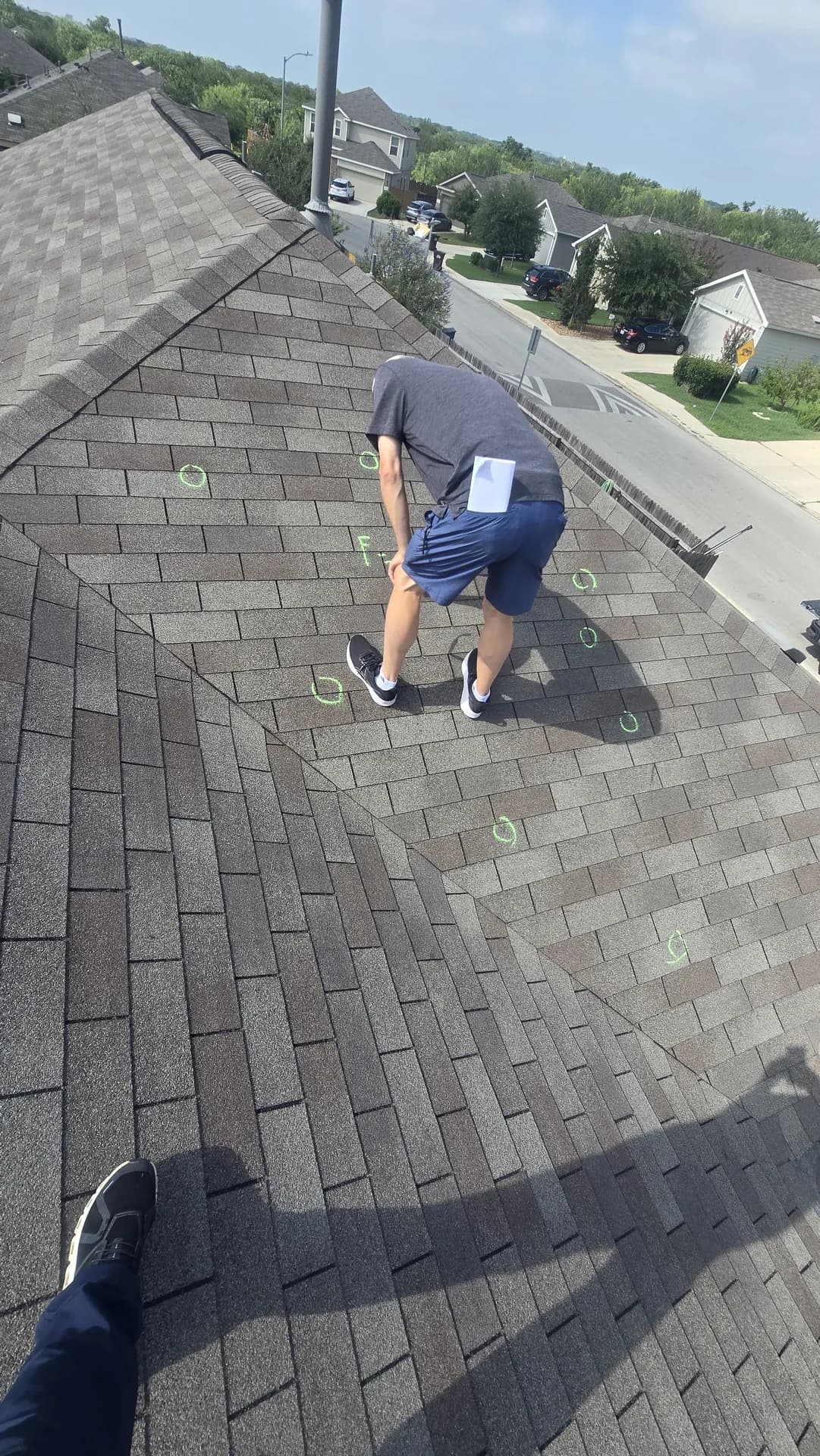
- Be on the roof when the adjuster is. Or have your roofer up there. After a big storm, adjusters see dozens of roofs a week, and having someone point out each hit, slope by slope, changes the outcome more often than you'd guess.
- Read the scope line by line. The usual gaps are drip edge, starter strip, decking, ridge vent and code-required items. Those get added through a supplement.
- Finish the job and send the invoice. On RCV, that last bit of paperwork is how you collect the recoverable depreciation held back from the first check.
That list is where our team earns its keep. Texas-RRR's in-house staff includes former insurance adjusters, and the team brings 30+ years of insurance claim experience to the audit and supplement stages, which is the reason we wrote why a former insurance adjuster on your roofer's team matters. The six steps are laid out on our process page.
Afraid a claim will bump your premium? Fair worry. It gets its own answer in will a hail claim raise your insurance rates in Texas.
The Short Answer, and What to Do Next
Does homeowners insurance cover roof replacement in Texas? Yes, when a covered storm damaged the roof past reasonable repair and you reported it on time with good documentation. Old age isn't covered. How much you get depends a lot on whether you carry replacement cost or actual cash value coverage, and on your wind and hail deductible.
Not sure where you stand after the last storm? Get the facts first. Texas-RRR does free estimates across the San Antonio and Austin metros, Monday through Saturday, 7 a.m. to 6 p.m.. Call (210) 802-6906 or request your free roof inspection and we'll tell you plainly if a claim makes sense.
Related services
Insurance Claims from Texas-RRR, with a free estimate before any work starts.

Written by
Owner, Texas-RRR (veteran owned) · 30 years of roofing experience · Team with 30+ years of insurance claim experience · In-house former insurance adjusters · Registered and insured