
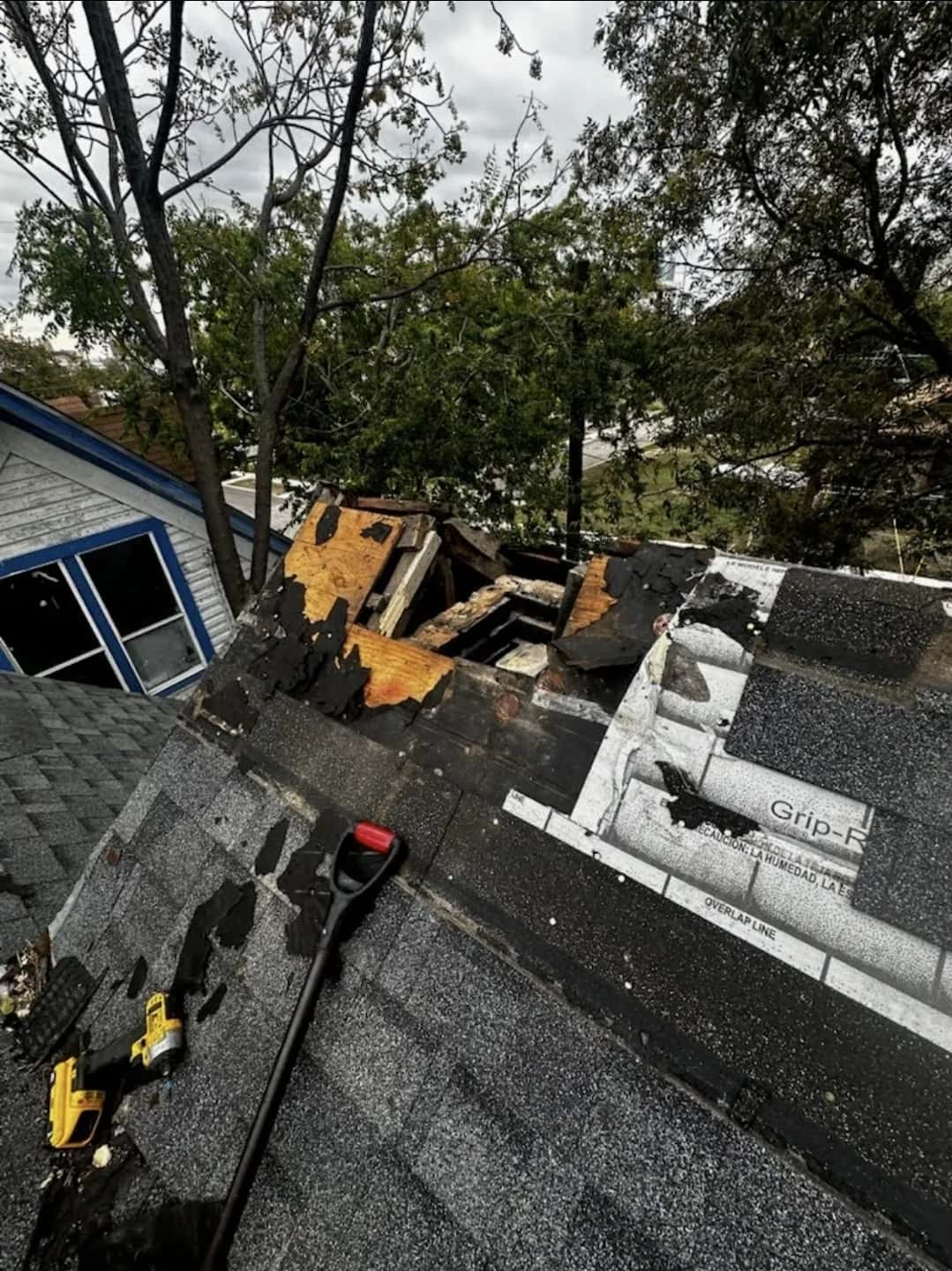

Tear-off revealing rotted, moisture-damaged roof decking and deteriorated felt beneath old shingles, tools on the roof

Mold Remediation

Mold Remediation in San Antonio, TX

Mold doesn't show up out of nowhere. Something's been wet, often for a long while, and mold remediation in San Antonio only sticks if that moisture stops for good. Texas-RRR tracks down the source, which is a roof leak more often than you'd think, follows Texas mold rules on every job, rebuilds what has to come out, and documents the whole thing for your insurance claim. Whatever kind of mold it is, it needs water. Cut off the water and it's got nothing to live on. Free estimates at (210) 802-6906.

  • We fix the leak behind it
  • Texas mold rules on every job
  • Attic and decking experience
  • Rebuild after clearance

Preferred
brands

Owens CorningGAF

Google5.016 reviews

  • Veteran Owned
  • Registered and Insured
  • San Antonio and Austin

What sets our mold remediation apart

  • We fix the leak behind it

    When mold comes back, there's nearly always a moisture source nobody dealt with. Roofs are our core trade, so the leaking valley, pipe boot or flashing joint gets repaired the right way.
  • Texas mold rules on every job

    In Texas, TDLR regulates mold assessment and remediation. We follow those rules on every job, and that includes who writes the protocol and who does the removal on bigger projects.
  • Attic and decking experience

    Our crews live on roofs and in attics. Moisture-damaged decking, soaked insulation, an attic that can't breathe: we know what those look like up close.
  • Rebuild after clearance

    After the affected materials are gone and the area passes its post-remediation check, our crews put the decking, insulation, drywall and paint back.
  • Claim help from former adjusters

    Texas policies can be stingy about mold. The claim often hinges on the water event that caused it, and our in-house former adjusters help you document that.
  • Straight answers, free estimates

    Got a small spot you can clean yourself? We'll say so. Monday through Saturday, 7 a.m. to 6 p.m..

What Mold Remediation Means, and What It Doesn't

You've got growth on a wall or in the attic, and two things need to happen: the mold comes out of the building, and the moisture that let it grow gets corrected. That's mold remediation. Done right, it follows an order. First the affected area is contained so spores don't drift into clean rooms during the work. Anything with growth that can't be cleaned (drywall, insulation, carpet, some wood) is bagged and hauled out. Hard surfaces like framing and tile get cleaned. The moisture source is found and fixed, whether it's a roof leak, a plumbing leak, or condensation from bad ventilation. Then somebody checks that the work actually succeeded; on a regulated project, that's the assessment consultant. Last comes the rebuild, putting back what was removed. Bigger projects in Texas also have to follow state rules on who assesses and who remediates, which the next section covers.

Spraying bleach on a wall and painting over it? Not remediation. The U.S. Environmental Protection Agency's mold remediation guidance says using a biocide like chlorine bleach is not recommended as a routine practice, since dead mold can still cause reactions and the goal is removal. We're with the EPA on this one. If a contractor's entire plan is a spray bottle and a coat of paint, get a second opinion.
Texas Mold Rules Every Homeowner Should Know

Mold work in Texas is licensed through a state program. The rules come from chapter 1958 of the Texas Occupations Code, and the Texas Department of Licensing and Regulation (TDLR) enforces them through its mold assessors and remediators program. What follows is a quick summary of how TDLR's materials describe it, meant as general information only.

  • The 25 square foot line. A mold project affecting 25 contiguous square feet or more generally requires licensed professionals. Smaller areas often fall under a minimum area exemption.
  • Assessment comes first. For a regulated project, a licensed mold assessment consultant evaluates the home and writes a protocol covering where the mold is, how it'll be contained, what gets removed, and how the consultant will judge success.
  • Licensed remediation. The work itself is carried out by a licensed mold remediation contractor, following that protocol.
  • Two separate companies. According to TDLR, the same person or company generally may not do both the assessment and the remediation on one project. It's a sensible guard against someone diagnosing a huge problem and then getting paid to fix it.
  • Clearance and a certificate. When the work's done, the consultant performs a post-remediation assessment. If the project passes, the property owner can receive a Certificate of Mold Damage Remediation. File it with your house records, because Texas law limits how an insurer can hold past mold damage against a home that has one.

Rules change, and the exemptions have fine print. Check with TDLR directly, or call them, before leaning on this for a particular job. We follow Texas mold rules on every job, and once a project crosses the 25 square foot line, the assessment and remediation steps go down the licensed path the rules lay out.

Why San Antonio Homes Grow Mold

Spores are everywhere, inside and out. All they need is moisture and something to feed on, and drywall paper, wood and plain dust all count as food. Around here the moisture tends to come from four places.

  • Humid Gulf air. Summers are hot and sticky. The EPA recommends keeping indoor humidity below 60 percent, ideally between 30 and 50 percent, and a lot of San Antonio homes sit above that.
  • Roof leaks. Hail or wind damages a shingle or a flashing joint, and water drips into the attic for months. The underside of the decking and the insulation stay damp, and growth gets going right where nobody looks. How we trace those leaks is on our roof leak repair page.
  • Attic condensation. Attics without enough ventilation, and attic air handlers with clogged condensate lines, keep the framing wet the whole cooling season.
  • Plumbing and old water events. Maybe it's a slow drip under a sink. Maybe it's a wall that never fully dried after a burst pipe. Drying a house properly so this doesn't happen is what our water damage restoration page is about.

It's the same story all over San Antonio, in older homes in Alamo Heights, newer subdivisions in Helotes, and out in Schertz and Boerne.

Signs of Hidden Mold in Walls and Attics

Mold you can see on a bathroom ceiling is the easy kind. The tricky ones hide behind drywall or up above the ceiling. Keep an eye out for:

  • A musty, earthy smell that's stronger in one room, or when the AC kicks on.
  • Dark or fuzzy spots on the underside of the roof decking or on the rafters. Shine a flashlight from the attic hatch and look.
  • Rusty nail tips poking through the decking.
  • Paint that bubbles or peels, soft drywall, or baseboards pulling off the wall, especially low on outside walls or near a bathroom or laundry room.
  • Ceiling stains that came back after somebody painted over them.

The EPA notes that mold exposure can cause allergic reactions and irritate the eyes, nose, throat and lungs in some people. If anyone at home has health concerns, see a doctor. We handle the building. The diagnosis isn't ours to make.

And please don't cut open a moldy wall yourself to see how bad it is. Opening it up without containment can send spores all through the house. Call first.

How a Mold Job Runs, and Where Texas-RRR Fits

A San Antonio mold job usually goes in this order. We've spelled out which parts are ours.

  1. Free inspection of the moisture source. We check the roof, the attic and the area with the growth, and photograph what's there. You get an honest read on how big it is and what caused it.
  2. Assessment where the rules require it. On a regulated project, an independent licensed mold assessment consultant evaluates the home and writes the protocol.
  3. Containment and removal. The affected area is sealed off and contaminated materials come out per the protocol. Where the rules call for it, a licensed remediation contractor does this part.
  4. Fix the source. Our wheelhouse. We repair or replace the roof, flashing or decking that let water in, so the problem stays gone.
  5. Clearance. The consultant checks the finished work against the protocol.
  6. Rebuild. Our crews put back decking, insulation, drywall, texture and paint.
  7. Claim documentation. Photos, the cause of the water event, and the scope for the roof and rebuild, all ready for your adjuster.

How we schedule and keep in touch on every job is on our our process page.

Mold and Your Homeowners Insurance

On a mold claim, cause is everything. The Texas Department of Insurance notes that many Texas homeowners policies limit or exclude mold coverage, and some pay for mold only when it comes from a covered water loss, such as a sudden pipe burst or storm damage to the roof. Long-term leak or high humidity? Usually excluded. Mold from a hail-damaged roof that leaked can be a different conversation. Policy language varies by carrier and by form, and some insurers sell mold coverage as an added endorsement. Ask your agent which applies to your home before you file.

Our in-house former insurance adjusters, with 30+ years of insurance claim experience behind them, help you put that record together: when the water event happened, what caused it, photos of the roof damage and the inside of the house, and a scope for the roof repair and rebuild. We'll meet your adjuster on site. You file and run your own claim, and we supply the documentation to back it. A properly run project's Certificate of Mold Damage Remediation belongs with those records too. Mold never gets cheaper with time. Read more on our insurance claims page or contact us to set up a free estimate.

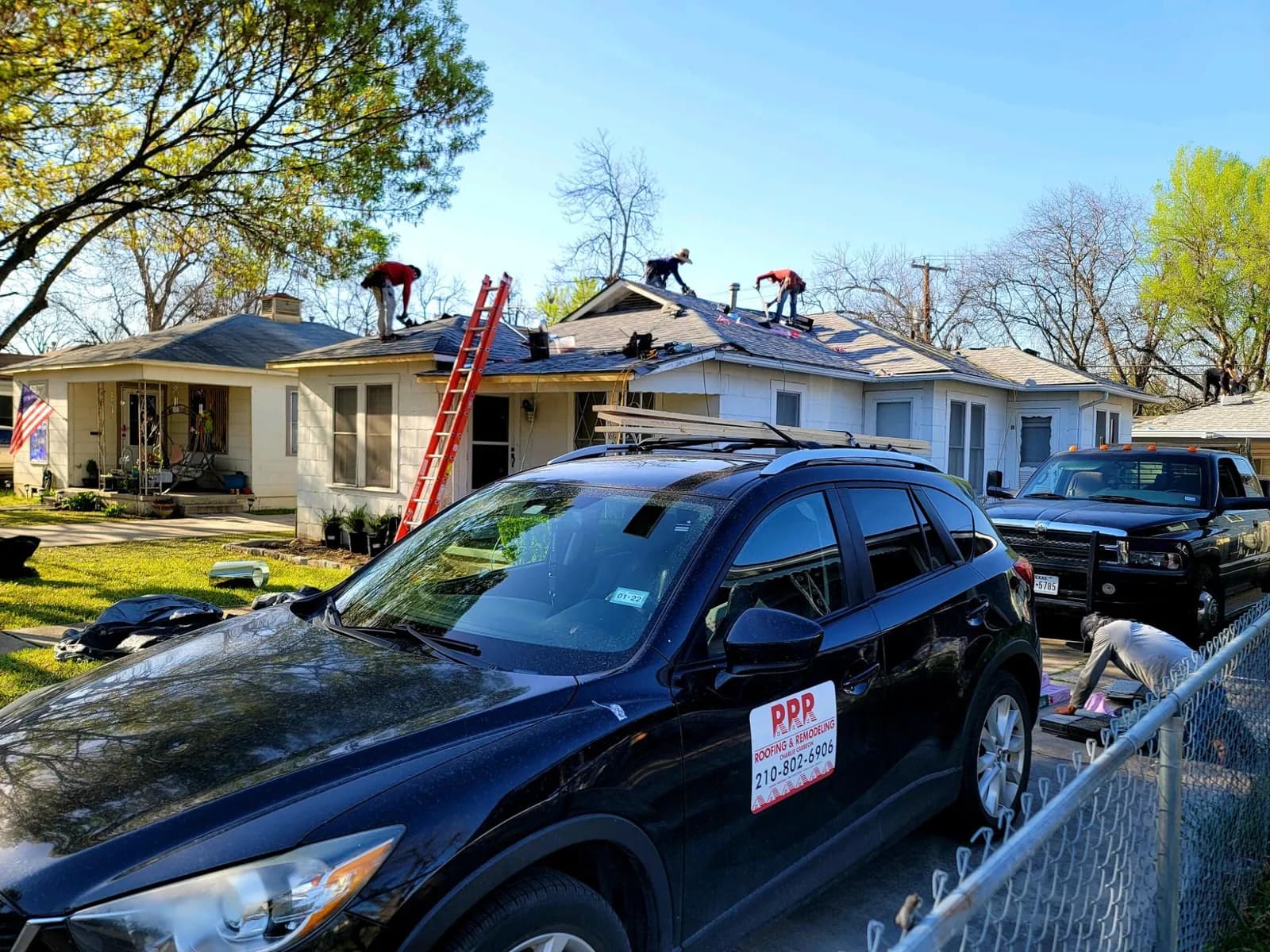
Roofing crews on two neighboring single-story homes with a company car and work truck parked out front.

Why San Antonio homeowners bring Texas-RRR in on mold

Most mold problems we see in San Antonio houses began as a water problem nobody caught. A roof leak that dripped slowly. An attic air handler that overflowed all summer. A pipe that froze in February 2021 and got patched in a rush. Because Texas-RRR is a roofing, remodeling and restoration contractor, we fix that source and rebuild the house around it, and the mold side of the job stays inside Texas rules.

We're veteran owned and based in San Antonio. Owner Charlie Carreon has 30 years of experience, and former insurance adjusters are part of our in-house staff. With 8 full crew teams we've completed 2,800+ projects, and we hold a 5.0 Google rating from 16 reviews. Connie T. called the team "friendly, professional and honest about repairs and costs." On mold, honesty counts for a lot. Fear sells plenty of work nobody needed. Registered and insured.

Projects completed
2,800+
Full crew teams
8
Charlie's years in roofing
30
Google rating from 16 reviews
5.0

Mold Remediation questions, answered

Free estimates, Mon to Sat, 7 AM to 6 PM

Get a free mold and moisture estimate in San Antonio

Call (210) 802-6906. Texas-RRR will find the moisture source, explain how Texas mold rules apply to your home, and plan the repair and rebuild.

Call NowGet your Mold Remediation quote