
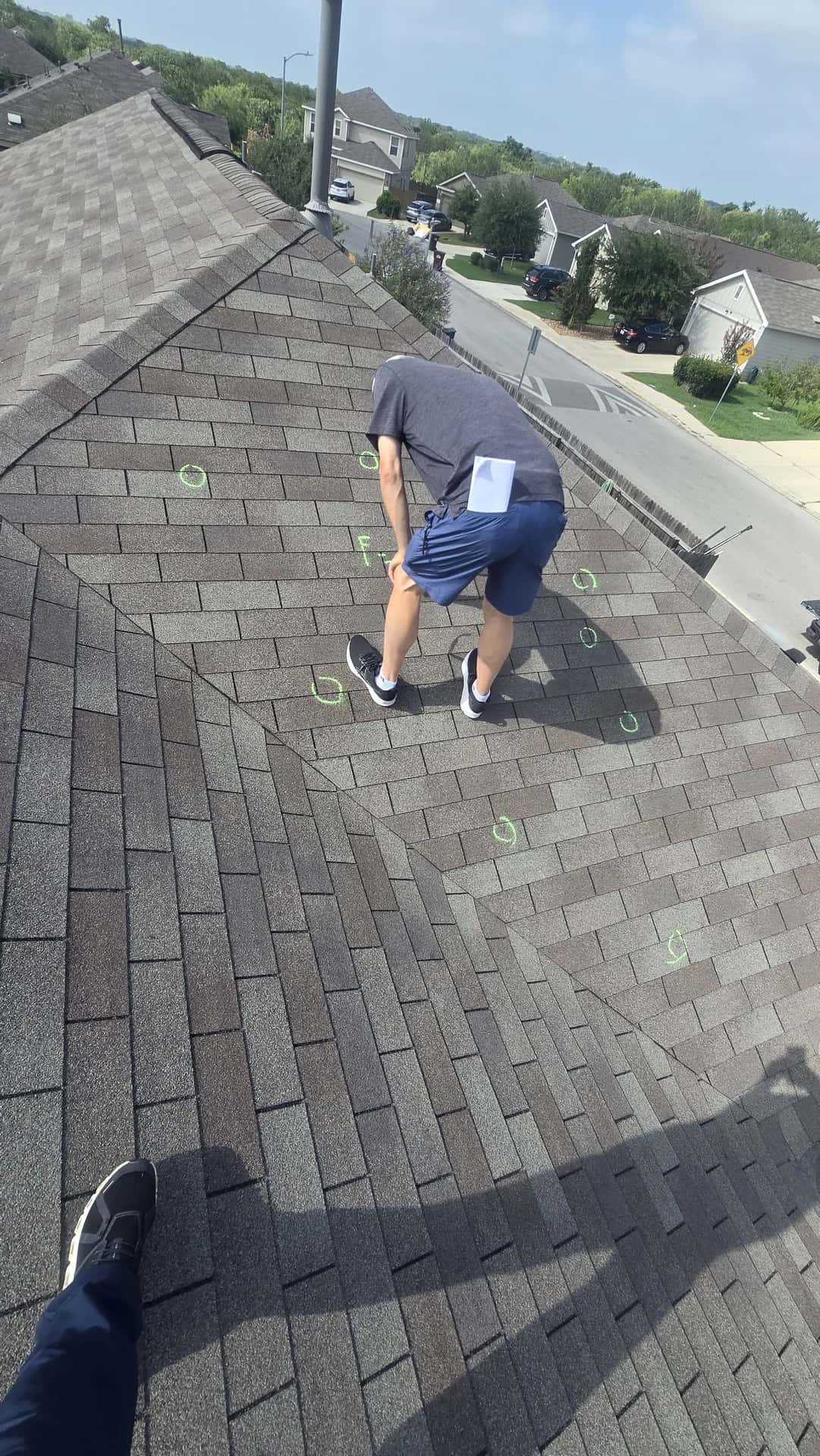


Inspector crouched on a brown shingle roof marking hail hits with chalk, residential street below

Storm Damage

Storm Damage Roof Repair in San Antonio and Austin, TX

After hail, straight-line wind, fallen limbs or ice, Texas-RRR handles storm damage roof repair in San Antonio and Austin, TX. We inspect the roof and decking, document every hit across the property, and work the insurance claim with former adjusters on staff. Roof open? We'll tarp it to stop the water. Estimates are free.

  • Free storm damage inspection
  • Former insurance adjusters in-house
  • The whole property documented
  • Repair when replacement isn't needed

Preferred
brands

Owens CorningGAF

Google5.016 reviews

  • Veteran Owned
  • Registered and Insured
  • San Antonio and Austin

What sets our storm damage apart

  • Free storm damage inspection

    We get on the roof, chalk every hail hit and lifted tab, and photograph the soft metals. It all goes into a report you can hand to your adjuster.
  • Former insurance adjusters in-house

    Some of our staff used to write these claims for the carrier. They know what a scope ought to include and what tends to get left off.
  • The whole property documented

    Siding, fence line, sheds, screens, AC fins. If the storm hit it, we photograph it for the claim so it makes the scope.
  • Repair when replacement isn't needed

    Sometimes the honest answer is a slope repair and new flashing. When it is, we'll say so instead of selling you a tear-off.
  • 8 full crew teams, two metros

    We schedule crews on the San Antonio line and the Austin line separately. A Round Rock hail event and a Helotes hail event won't be fighting over the same truck.
  • Owens Corning and GAF

    Our preferred roofing brands when a storm means replacement. American-made shingles, put on by crews that are registered and insured.

Storm Damage Roof Repair Starts With the Roof

Central Texas storms don't stop at one target. The cell that bruises your shingles will also dent the turbine vents, strip paint off the siding, drop a limb on the shed and lay down forty feet of cedar fence, all in one pass.

We start with storm damage roof repair because the roof is what keeps water out of the house. Everything else gets documented so it lands on the claim too. After hail, wind and ice, this is the work:

  • Hail damage roof repair. Bruised and fractured shingles, granule loss, cracked pipe boots, dented soft metals. Could be one slope, could be a full replacement.
  • Wind damage roof repair for creased tabs, missing shingles, peeled flashing and ridge caps that disappeared in a microburst or hurricane-remnant gusts.
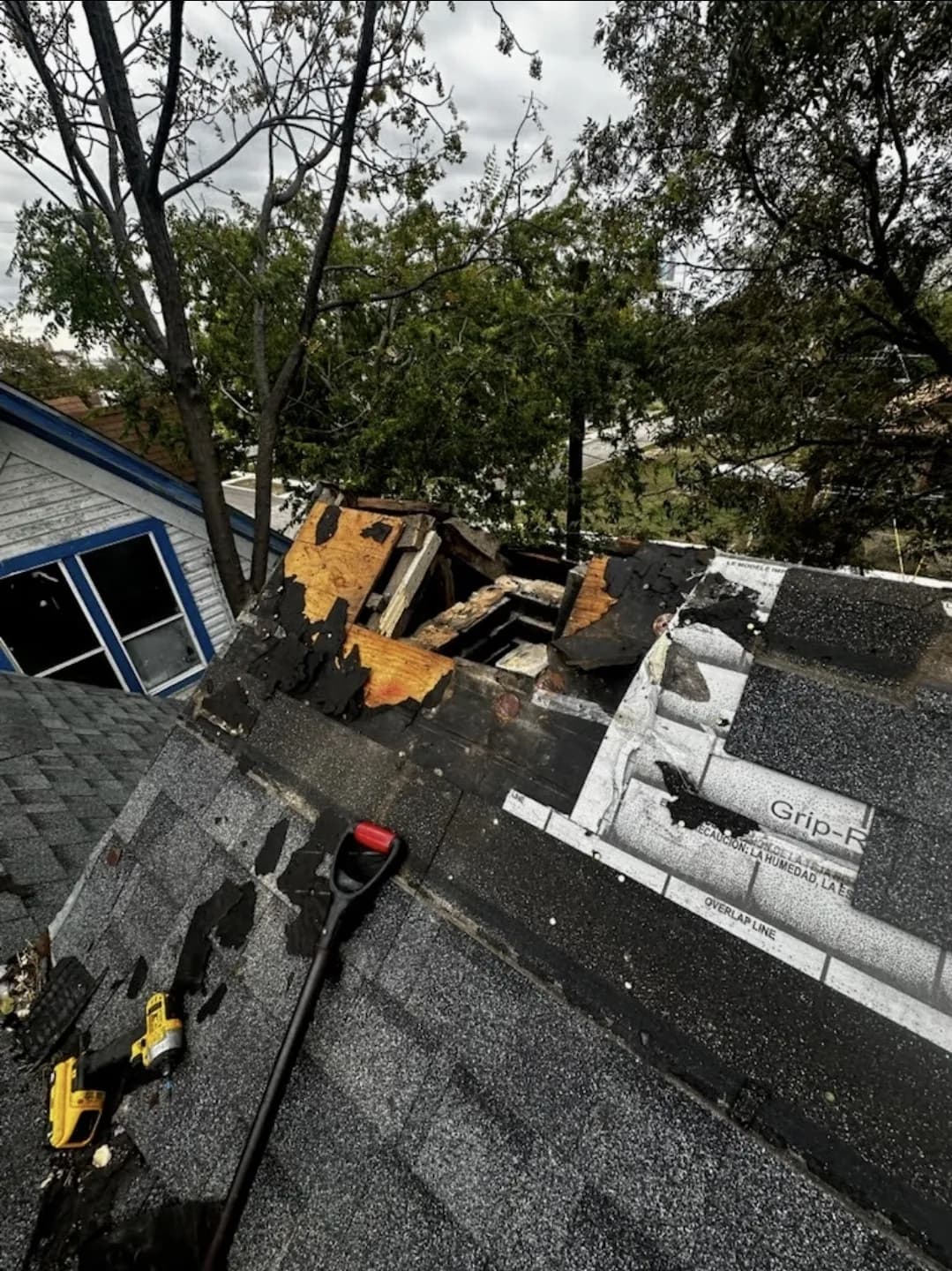
  • Decking and rot. Once hail opens the roof and rain gets in, the wet decking comes out. We won't nail new shingles over it.
  • The rest of the exterior, siding to fence line, photographed and documented for the claim (there's a section on it below). Insurers often cover it under the same claim. Homeowners often forget to list it.
  • Limbs and storm debris, cleared off the roof so we can fix the shingles, decking and gutters they damaged. The tree itself is a job for a tree service or certified arborist, and we're glad to work around their schedule.

We'll say this early, too. Even after a bad storm you may not need a whole new roof. If the damage sits on one or two slopes and the rest has life left in it, repairing those areas is the honest call, and we'll put that in writing for your adjuster.
Why Central Texas Roofs Keep Getting Hit

Drive I-35 from San Antonio up to Georgetown and you're crossing one of the most active hail belts in the country. In 2025 Texas led the nation in major hail events for the eleventh straight year. Both of our metros have taken direct hits in the last decade, and these storms shaped the roofs we're working on now.

  • April 12, 2016, San Antonio. Hail up to 4.5 inches fell in Helotes on the northwest side, and baseball-size stones were reported across northeast Bexar County. At the time it was the costliest hail event in Texas history.
  • April 28, 2021, Hondo. A 6.4-inch hailstone in Medina County set the Texas state record. The system then split, sending one cell over Boerne and another through San Antonio and east along I-10 toward Seguin.
  • September 24, 2023, Round Rock. Hail up to 4 inches tracked from Georgetown through Round Rock into north Austin, with quarter-size hail in Pflugerville. The National Weather Service called it the most costly damage event ever to hit the Austin region.
  • April 22, 2025, Georgetown. More large hail over Georgetown and east Round Rock. The Saddle Creek area got hit hard.
  • May 28, 2025, Austin microburst. Wind this time, not hail. The surveyed damage path ran roughly ten miles from Hyde Park east past the airport, with a 77 mph gust measured at ABIA, and the damage on roofs looked nothing like a hail pattern.

Then add the January 2023 ice storm, which dropped live oak limbs onto roofs and fences all over Travis County. That's a big part of why we chose to run a dedicated Austin line. Right now Williamson and Travis counties are the hail epicenter. San Antonio's big years were 2016 and 2021, and plenty of those roofs are eight or nine years old today and due for a close look.

Hail Damage vs. Wind Damage: How to Tell Them Apart

Your adjuster is going to ask what caused the damage, and the answer changes what the claim pays for. Hail and wind leave different fingerprints. These are the signs we check, one at a time.

Shingle bruising

Hail: soft, round dents you can feel under your thumb, scattered randomly across the slopes that faced the storm. Wind: none at all. Wind can't bruise a shingle, so bruising by itself points to hail.

Granule loss

Hail: circular bare spots down to the black asphalt mat, each about the size of the stone that hit it. Wind: streaks along the tab edges where the shingle flapped, plus a pile of granules sitting in the gutter afterward.

Creased or lifted tabs

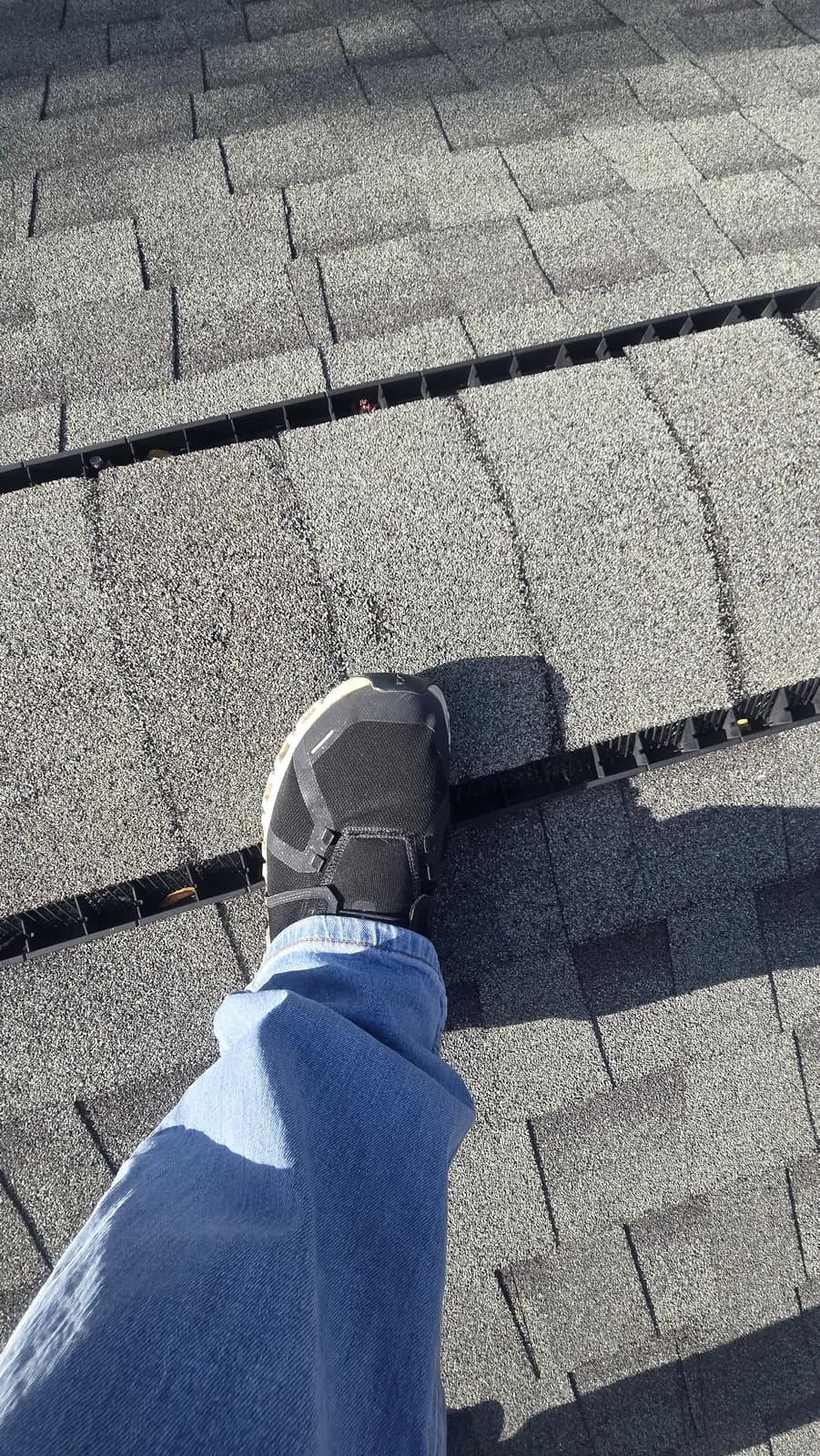
Hail: rare. Wind: this is the giveaway. You'll see a horizontal crease where the tab folded back on itself, and a seal strip that won't hold anymore. Those shingles will leak later, even if they're lying flat today.

Missing shingles

Hail: almost never by itself. Wind: yes, usually at the ridge, the rake edges and the eaves on the windward side. That's how the May 2025 microburst stripped whole courses.

Flashing

Hail: dents in step and counter flashing. Ugly, but they seldom leak on their own. Wind: flashing lifted or peeled back at walls and chimneys. After a wind event, it's one of the most common leak sources we find.

Soft metals (vents, gutters, pipe boots)

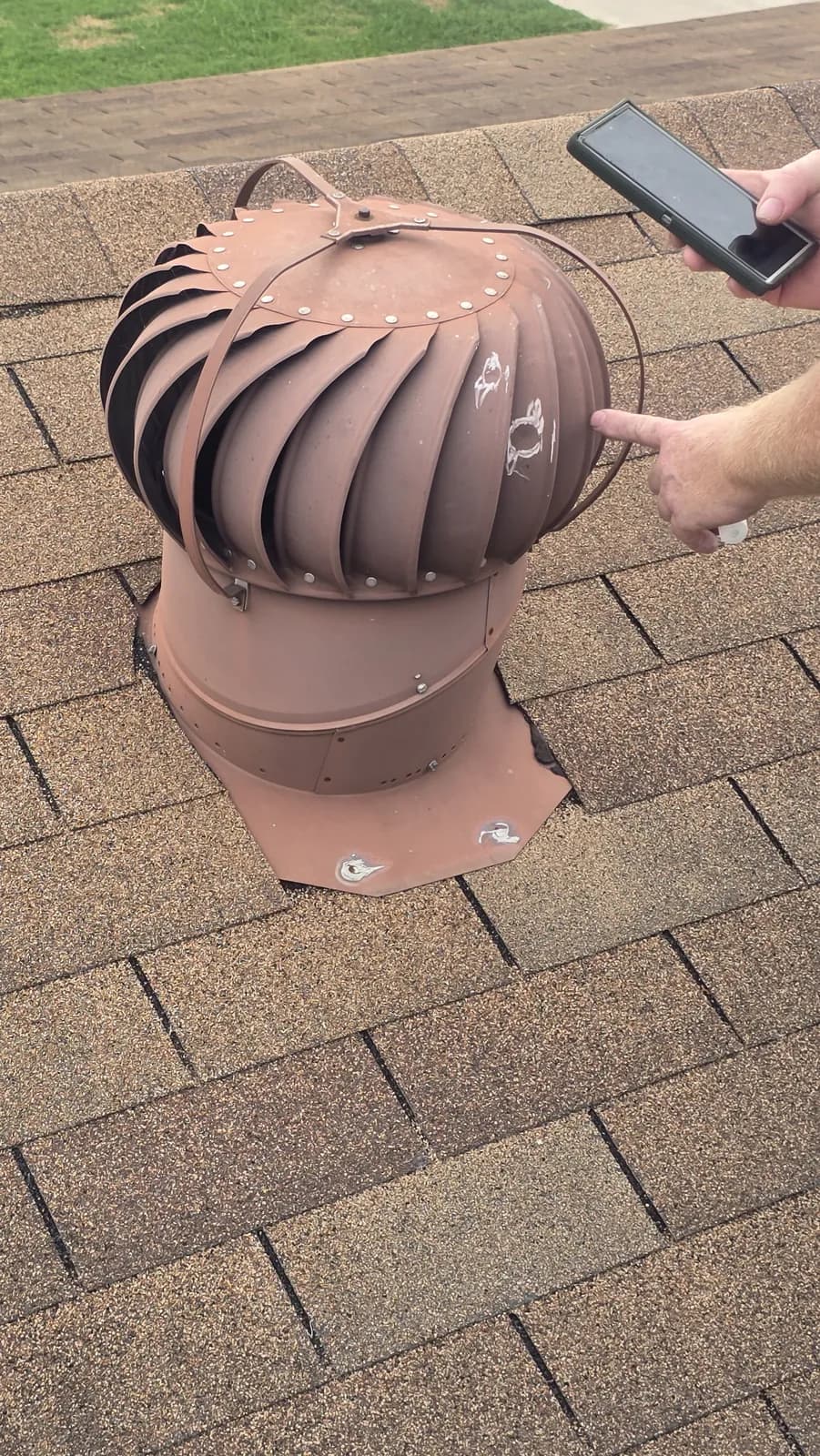
Hail: dings on turbine vents, pipe boot collars, gutters and AC fins. An adjuster looks here first to confirm hail size, so we photograph every single one. Wind: turbine caps torn off and gutters bent by flying debris, with no dents.

Why should you care? An adjuster can write up a wind-creased roof and a hail-bruised roof both as "storm damage," and the carrier will push back on a scope that names the wrong cause. Our former adjusters write the cause the way the carrier's own desk reviewers expect to read it. Can't tell which one you've got? Don't guess. Send us a photo.

After the Storm: Do This First

Months after the September 2023 hail, Round Rock homeowners were still finding leaks, because from the driveway the damage had looked minor. So don't sit on it. This is the order we'd follow in the first 72 hours.

  1. Stop active water. See daylight, or water coming through a ceiling? Call for emergency roof repair. We tarp open roofs to stop the water, and a tarp buys you time without hurting your claim.
  2. Photograph everything from the ground. Dented gutters, hail on the patio, limbs on the fence, the shed's broken windows. Date-stamped phone photos are the best evidence you'll ever have.
  3. Stay off the roof. Wet shingles and loose tabs put people in the ER after every storm. Leave the ladder work to us. Our crews are up there every day.
  4. Get a free inspection before you call the carrier. You want to know the scope of damage before you open a claim, not after, and our report gives you that.
  5. Check the whole property. Fences, sheds, siding, window screens and AC units are all claim line items. Most homeowners list only the roof.
  6. Watch who knocks on your door. Out-of-town crews show up within hours of every hail event along I-35. Ask for proof of licensing and insurance, and for local references. (We're registered and insured, and we're based in San Antonio.)

How the Storm Claim Process Works With Texas-RRR

A storm claim is where having former insurance adjusters on our in-house staff really shows. Hail in Georgetown or wind in Helotes, every job runs through the same six steps. The long version is on our insurance claims page. Here's the short one.

  1. Free estimate. We inspect, chalk the hits, photograph the soft metals and write up a scope. Then you decide whether a claim makes sense.
  2. Meet the adjuster. We're on the roof with the carrier's adjuster, so every hit gets counted while both of us are standing right there.
  3. The audit process. Line by line, we compare the adjuster's scope to ours.
  4. Supplemental report. Anything missed (decking, drip edge, code upgrades, other structures) goes back to the carrier with documentation.
  5. Begin building. Materials get ordered, the crew gets scheduled, the work gets done. On a straightforward replacement that's often a single day.
  6. Inspection and recoverable depreciation. We complete the final inspection and submit the paperwork that releases the depreciation your carrier held back.

Yvette D. described it better than we can in her Google review, after a tree came through her roof: "They dealt with the insurance company so I didn't have to. They're knowledge and experience helped me get the best settlement." We don't keep former adjusters on staff to inflate claims. We keep them so the carrier pays for what the storm actually broke.

Storm Damage Beyond the Roof Belongs on the Claim

The storm that bruised your shingles probably didn't stop at the roof. On the same afternoon it can lay a section of cedar fence over, dent the siding, peel back a metal shed roof and shred the window screens. And none of that does you any good if it never makes the adjuster's scope.

Fences, sheds and detached garages typically sit under a separate other structures line on a Texas homeowner policy. An adjuster working a hundred roofs in a week won't always walk your back fence, and whatever isn't in the scope won't be in the check. So on the first visit we photograph the fence line, the siding and every outbuilding along with the roof, note what the storm damaged, and walk the whole yard with your adjuster.

One honest limit. Damage that was there before the storm, like a fence rotted at the post line, isn't storm damage, and we'll tell you so instead of padding the report.

Storm Damage Repair Across San Antonio and Austin

One company, two metros. The San Antonio line covers Bexar, Comal, Guadalupe, Kendall, Medina, Wilson, Atascosa and Bandera counties, including the 2016 and 2021 hail corridors through Helotes, Boerne and the northeast side. Our Austin line takes in Travis, Williamson, Hays, Bastrop and Caldwell counties, which is where the 2023 through 2025 events landed.

In Austin with hail or microburst damage? Call our Austin line and we'll set up your free inspection. In San Antonio, Boerne or Hondo, the 210 number gets you the same team. Wherever you are, the inspection's free, the report is yours to keep, and we'll tell you plainly whether the roof needs the damaged slopes repaired or a full replacement.

Still not sure what you're looking at? Start with a free roof inspection. The crew lead who inspects your roof also documents storm damage across the rest of the property, so the whole claim runs through one point of contact.

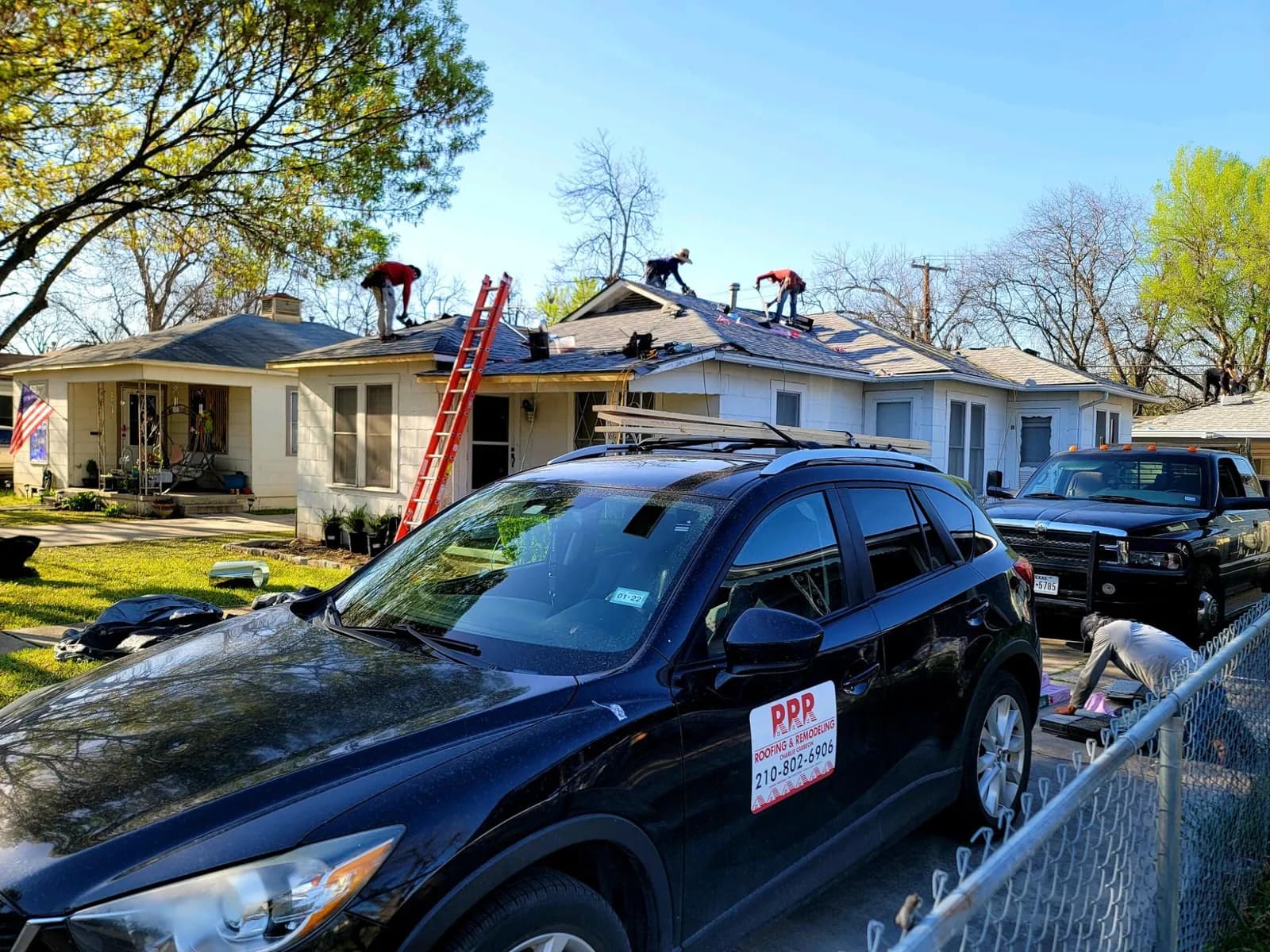
Roofing crews on two neighboring single-story homes with a company car and work truck parked out front.

Why Texas-RRR for storm damage

Nailing shingles is the easy part of a storm job. The hard part is getting the scope right the first time, so the claim pays for the damage that's really there. Texas-RRR is a veteran-owned storm damage contractor with 30+ years of insurance claim experience behind it. Owner Charlie Carreon has spent three decades on roofs himself. The crews? They've worked side by side with him for over 20.

We've completed 2,800+ projects across the San Antonio and Austin metros, and storm work is where our in-house former adjusters really earn their keep. Marco P. said this in his Google review: "Came out for the estimate Friday, had a guy on site the next day! 100% satisfied with the quality of work. I'll definitely be calling this company when the next storm blows in." There's more on our reviews page.

Projects completed
2,800+
Full crew teams
8
Charlie's years in roofing
30
Google rating from 16 reviews
5.0

Storm Damage questions, answered

Free estimates, Mon to Sat, 7 AM to 6 PM

Get a free storm damage inspection

Hail, wind, ice or a limb through the roof. Texas-RRR inspects the roof and the rest of the property, documents the damage and handles the claim. Roof open to the sky? We'll tarp it to stop the water.

Call NowGet your Storm Damage quote