Metal Roof vs Shingles in Texas: Cost, Lifespan, Hail, and Is Metal Worth It?
By Charlie Carreon, Owner7 min read
A hailstorm rolls through, the neighbors all get new roofs, and one neighbor goes metal. That's how the metal roof vs shingles in Texas question usually comes up. Now you're wondering whether they knew something you didn't. Could be. Could also be a bigger budget. We'll go through cost, lifespan, hail, heat and insurance so you can decide for your own house, not the one next door.
Short version first. Asphalt shingles are cheaper on day one and easier to repair. Metal costs more and lasts longer, and it handles wind and heat better. It can also dent in hail, and some Texas policies won't pay a dime for dents. Which way you should go comes down to how long you'll stay, how often your area gets hammered and what your policy says.
What a metal roof costs compared with shingles
You won't see our prices in a blog post. Every roof is different, and a number without an inspection is just a guess. The public ranges are out there, though. National cost guides from Angi, HomeGuide and others generally put an installed metal roof at roughly two to three times the cost of an architectural asphalt shingle roof on the same house. Standing seam sits at the top of that range, and exposed-fastener panels (often called R-panel or ag panel) sit lower.
So where does the gap come from? Three places. The material itself, since painted steel coil costs more per square than a bundle of shingles. Labor and skill, because metal panels have to be measured, cut and trimmed carefully, and a mistake at a valley or a penetration is expensive to undo. And accessories: closures, clips, special trim and snap-lock or mechanically seamed panels pile up fast on a chopped-up roof full of hips and valleys.
A plain, low-pitch ranch roof shrinks the gap. Add a steep pitch, dormers, skylights and four chimney chases and it grows. For real numbers on your house, a free estimate beats any calculator online.
Lifespan in Texas heat: the honest version
Manufacturers like big numbers. The Metal Roofing Alliance says a metal roof can last 40 to 70 years, and asphalt shingles are typically marketed for 20 to 30 years or more.
Down here, the shingle number usually comes up short. Long runs of 100-degree days bake the asphalt, the granules wash off faster, and the shingle turns brittle sooner than it would in Ohio. Metal mostly shrugs off heat. Its coating can chalk and fade over decades, and exposed fasteners need watching, because the rubber washers on the screws dry out and can start leaking somewhere around the 10 to 20 year mark, depending on the product. Standing seam keeps its fasteners hidden. That's a big part of why it costs more, and why it's the version people mean when they talk about 50 years.
Practically speaking? Selling in seven years, you probably won't get the full metal premium back. If this is the house you retire in, a well-installed metal roof could be the last roof you ever pay for, and that beats any brochure claim.
Hail: where the decision gets tricky
Most comparison articles skip right past this. In Texas it matters more than anything else on the list.
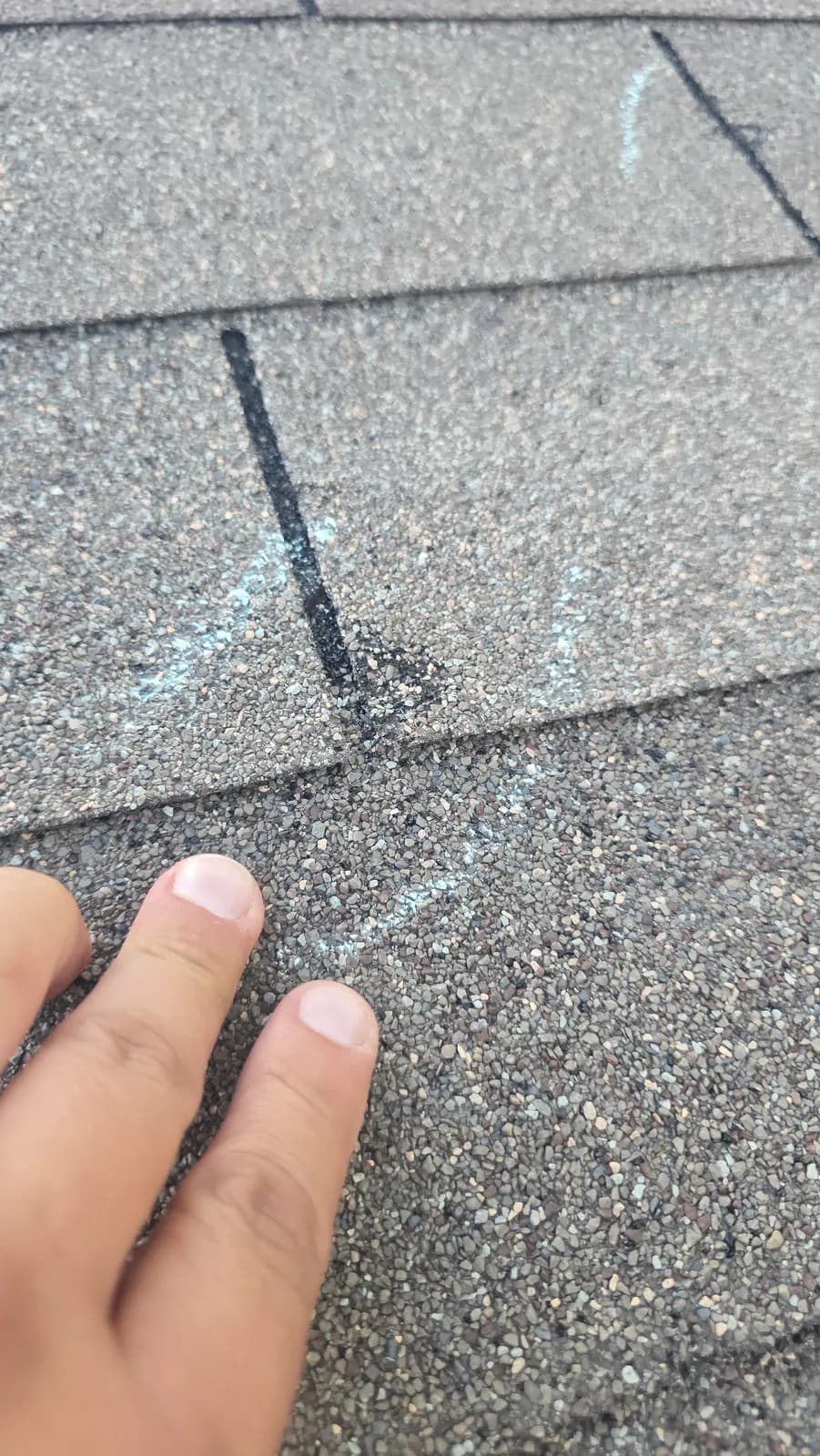
Hail rarely makes a metal roof leak, because the steel stops the stone. It can dent it, though, sometimes badly, and dents are as much a looks problem as a function problem. Shingles fail the other way around. Big hail bruises the mat, cracks it and knocks granules loose, and leaks show up down the road even when the roof looks okay from the street.
You can get either one impact-rated. The usual test is UL 2218, and Class 4 is its highest rating. Owens Corning and GAF, our preferred brands, both sell Class 4 impact-resistant shingles, and plenty of metal products carry a Class 4 rating too. Don't read that label as hail-proof. All it means is the product passed a lab test with steel balls dropped from set heights.
Check your policy for a cosmetic damage exclusion
More Texas insurers now offer a cosmetic damage exclusion on metal roofs, and some require one. Under that endorsement, the carrier only pays when hail hurts the roof's ability to keep water out, so dents that look ugly but don't leak may not be covered. Before you choose metal, read your declarations page and endorsements and ask your agent point blank. There's more in our post on the cosmetic damage exclusion.
It cuts the other way too. Some Texas insurers give premium discounts for impact-resistant roofing. The Texas Department of Insurance publishes consumer information on homeowners coverage, and your agent can tell you if your carrier has a discount and what proof it wants. Policies are all over the map on this, so get the answer in writing.
Is a metal roof worth it in Texas?
"It depends" is true and not very helpful, so here's something more specific. Metal usually pays off when most of these fit:
- You'll be in the house 15 years or longer.
- Your policy doesn't penalize dents with a cosmetic exclusion, or a few dents won't bother you.
- You'd like a cooler attic. Light-colored or reflective metal coatings throw back more sun than dark shingles.
- You're on acreage, out in the Hill Country, or anyplace where long roof life matters more than a lower upfront price.
- You want to catch rainwater. Metal sheds clean water, so Central Texas rain catchment folks tend to go that way.
Shingles usually win when money's tight, when you might move in a few years, when your HOA restricts metal, or when your neighborhood takes big hail often and you'd rather replace a cheaper roof through insurance than fight over dents on a pricey one. Sounds cynical, maybe. It's also how plenty of Texas homeowners really think, and we don't blame them.
And architectural shingles aren't a step down. Put on right, with proper ventilation and new flashing, a good architectural shingle roof will serve most families just fine. Still deciding between shingle types? Our comparison of 3-tab vs architectural shingles covers it.
Heat, noise, and the other things people ask about
Does metal make the house hotter?
No. Folks imagine a tin shed in July, but metal over solid decking and underlayment doesn't heat your living space any more than shingles do, and with a reflective finish it often runs cooler. Color still counts. Dark bronze metal soaks up more heat than light gray or white, just like a black shingle. We explain why in our post on the best shingle color for Texas heat.
Is a metal roof loud in the rain?
On a house with decking, underlayment and an insulated attic, most homeowners say rain sounds about like it does on shingles. A barn with metal over open purlins? Different story. Residential installs over decking are quieter than people expect.
Can you put metal over existing shingles?
Sometimes. Local code and the manufacturer's instructions decide it. You save on tear-off, but any rotten decking underneath stays hidden. Pros and cons are in metal roof over shingles.
What about wind?
Properly fastened metal panels do well in high wind, which is one reason coastal and Gulf-facing homes like them. Shingles have wind ratings as well, and most quality architectural shingles are rated well above what a 3-tab can handle. On either roof, the install matters more than the label. Nail placement and edge detail decide whether it stays on.
How to make the call for your house
Ask yourself three things. How long will you own the place? What does your policy say about cosmetic damage and impact-resistant discounts? And what shape are your decking and ventilation in today? Those answers narrow it down faster than any pros-and-cons chart.
Next, get someone up on the roof. Charlie, our owner, has 30 years of roofing experience, and we've finished more than 2,800 projects around San Antonio and Austin. Since we install both shingle roofing and metal roof installation, we've got no reason to steer you toward either one. Like the idea of hidden fasteners? Have a look at our standing seam metal roofing page. If hail already got your current roof, begin with hail damage roof repair and find out what insurance owes you before choosing a material.
For a straight answer on your roof, request a free estimate or call (210) 802-6906, Monday through Saturday, 7 a.m. to 6 p.m.. We'll check the roof, go through the policy with you if you want, and tell you which way we'd go.
Related services
Metal Roofing from Texas-RRR, with a free estimate before any work starts.

Written by
Owner, Texas-RRR (veteran owned) · 30 years of roofing experience · Team with 30+ years of insurance claim experience · In-house former insurance adjusters · Registered and insured